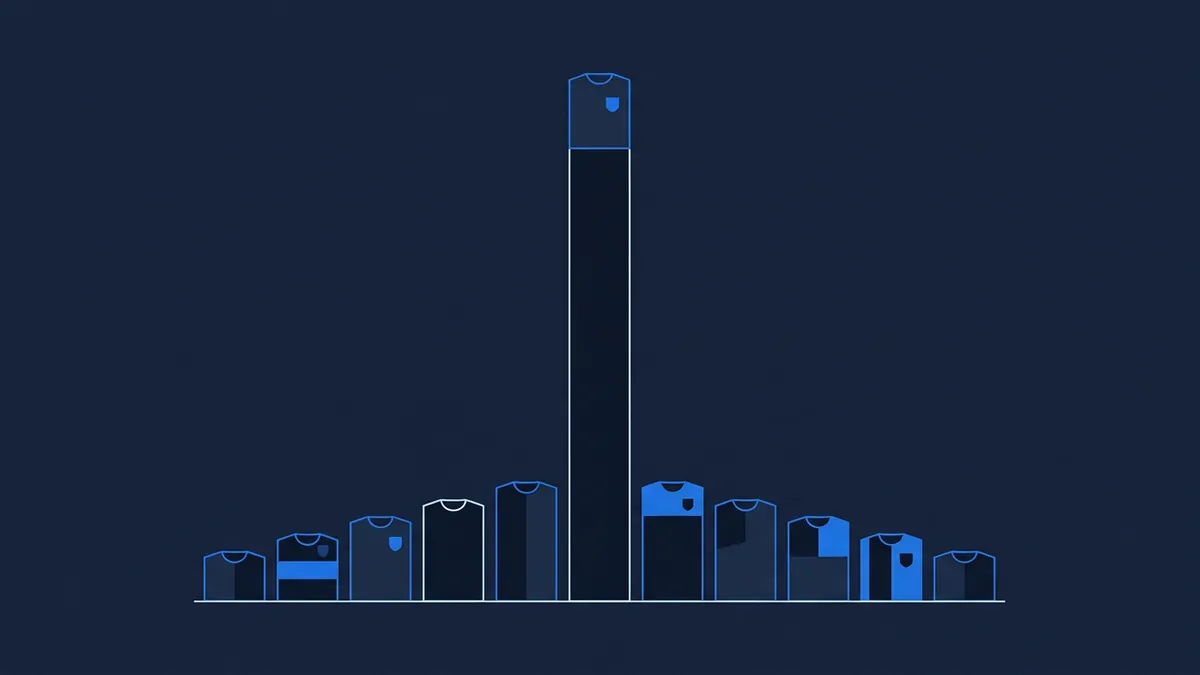
A baseball season is a long argument with itself. Six months of at-bats, a rotating cast of injuries, hot streaks and cold ones, and somewhere in the middle of all that noise a group of writers eventually decides which player mattered most in the National League. That is the question the 2026 NL MVP market on Polymarket is trying to price, and it is doing so in the most lopsided shape you tend to see in a season-long award contract.
As of 2 July 2026, Shohei Ohtani sits at around 89% on the contract. Everyone else, thirteen names on the board including Kyle Schwarber near 5%, Juan Soto around 4%, Corbin Carroll near 3%, and a long tail of single-digit and sub-one-percent longshots, is being asked to split what is left. That is not a race. That is a market saying it has already made up its mind, and inviting you to argue with it.
Deposit $20, get $50 to trade
Welcome bonus on the world's largest prediction market.
18+ · New users only · Availability and terms vary by region · Trading involves risk of loss · BeGambleAware.org
What a 89% MVP price actually means
Award markets are strange animals. They resolve on a vote, not on a scoreboard, which means the thing being priced is not really "who will play best" but "who will the electorate crown at the end of it." Those are related questions. They are not the same question.
The Polymarket contract's resolution criterion is the actual announced winner of the 2026 National League Most Valuable Player Award, with tidy tie-break rules and an "Other" catch-all if the season is cancelled or postponed past the end of December. So a trader holding Ohtani at 89% is not just betting on his numbers. They are betting on the interaction between his numbers, the narrative around them, and the way BBWAA voters historically weight two-way play, counting stats, team success, and the intangibles they tend to reach for when a season is close.
Read that way, an 89% price is doing a lot of work. It is saying: probable durable health, probable production at the level everyone has come to expect from him, probable voter buy-in, and probably no rival season loud enough to overturn any of that. Four "probables" stacked on top of each other. That is why award markets with one dominant name tend to look extreme even when the underlying baseball question is closer than the price suggests.
If you have not spent much time with contracts like this, our explainer on how prediction market odds work is a good grounding for why the number is not a forecast in the plain-English sense.
The shape of the field behind him
The more revealing thing about this market is not Ohtani's number. It is the shape of the field behind him.
Schwarber near 5%. Soto around 4%. Carroll around 3%. Bryce Harper and Pete Crow-Armstrong both around 2%. Then a cluster of names, Ronald Acuña Jr., Fernando Tatis Jr., Andy Pages, Mookie Betts, Elly De La Cruz, Kyle Tucker, Francisco Lindor, all sitting at under one percent. Thirteen named outcomes, and only three or four of them are being priced as if they have any real live chance of winning.
That is not a market hedging its bets. That is a market saying the alternative scenarios to Ohtani are more or less interchangeable, and any of them would require something dramatic, an Ohtani injury, a truly historic season from a challenger, a narrative shift in the voting, before the price would meaningfully rearrange itself. The tail is long, but it is flat. In a genuinely contested race you would expect two or three names in the 20-40% zone and a live debate between them. This is not that.
It is worth flagging the sensitivity here. When one name owns most of the probability, the whole contract essentially becomes a referendum on that one name's season. A midseason wobble or a serious injury does not just move Ohtani's price. It redistributes an enormous amount of implied probability all at once, and the shape of the rest of the ladder can change quickly because there is so much probability to redistribute.
Why award contracts are structurally interesting
Most of the sports contracts that get attention are game-by-game or tournament brackets, where the resolution is a scoreline and the market prices a mostly-mechanical outcome. Season-long awards are a different beast. They resolve on human judgement at the end of a very long process, which means the contract is quietly pricing three separate things: on-field production, health and availability across six months, and the sociology of how the voters interpret all of it.
That makes them useful as a reading exercise even if you never trade one. A lopsided award market, like this one, is telling you that the market thinks the production and the narrative are essentially locked in as long as the player stays on the field. It is a health-and-narrative bet dressed up as a baseball bet.
It is also why the honest reading of an 89% price is not "Ohtani has an 89% chance of being the best player." It is closer to "conditional on a broadly normal season for him, the market thinks the vote is his." The two framings sound similar and they are not. The first flatters the market. The second is what the contract is actually doing, and it is the reading that survives the season's inevitable weirdness.
iPredicta tracks contracts like this one across Polymarket and the regulated venues precisely because the shape of an award market says something the game-by-game markets cannot: how the crowd is pricing not just the sport, but the story the sport is going to tell about itself.

Frequently asked questions
How does the 2026 NL MVP market on Polymarket actually resolve?
It resolves to the player officially announced as the 2026 National League Most Valuable Player, using official MLB information as the source. Ties are handled by MLB's own rules, and if multiple winners are declared the market resolves alphabetically by listed last name. If the 2026 season is cancelled or postponed past 31 December 2026 with no winner declared, the contract resolves to "Other".
Why does one player being priced so high not mean the race is over?
Because the contract is really pricing three things at once: on-field production, staying healthy across a long season, and how voters weigh the case at the end of it. Any of those can shift. A lopsided price says the market thinks a normal season is enough to win, not that a normal season is guaranteed, and season-long award markets have historically repriced hard when a leader misses meaningful time or a rival puts together a genuinely historic run.