The S&P 500 sat near 7,610 on 2 June, then sold off on a strong jobs report, closing 5 June around 7,384, about 3 percent below that high, before rebounding. The decline ran deeper than that close: the index touched roughly 7,300 at its worst, so June's realised range so far runs from about 7,300 to about 7,610. That kind of two-sided month is exactly what makes Polymarket's June question on the index, what price will SPY hit in June 2026, worth reading carefully. The trouble is that the contract is easy to read wrong.
It looks like a single bet on where the index lands at month-end. It is not. It is a ladder of independent touch contracts, and reading it the right way changes what the prices are telling you. The strikes are quoted in SPY dollars, which track the index at roughly one tenth of its level, so the $760 strike corresponds to an S&P 500 around 7,600.
Deposit $20, get $50 to trade
Welcome bonus on the world's largest prediction market.
18+ · New users only · Availability and terms vary by region · Trading involves risk of loss · BeGambleAware.org
How the contract actually resolves
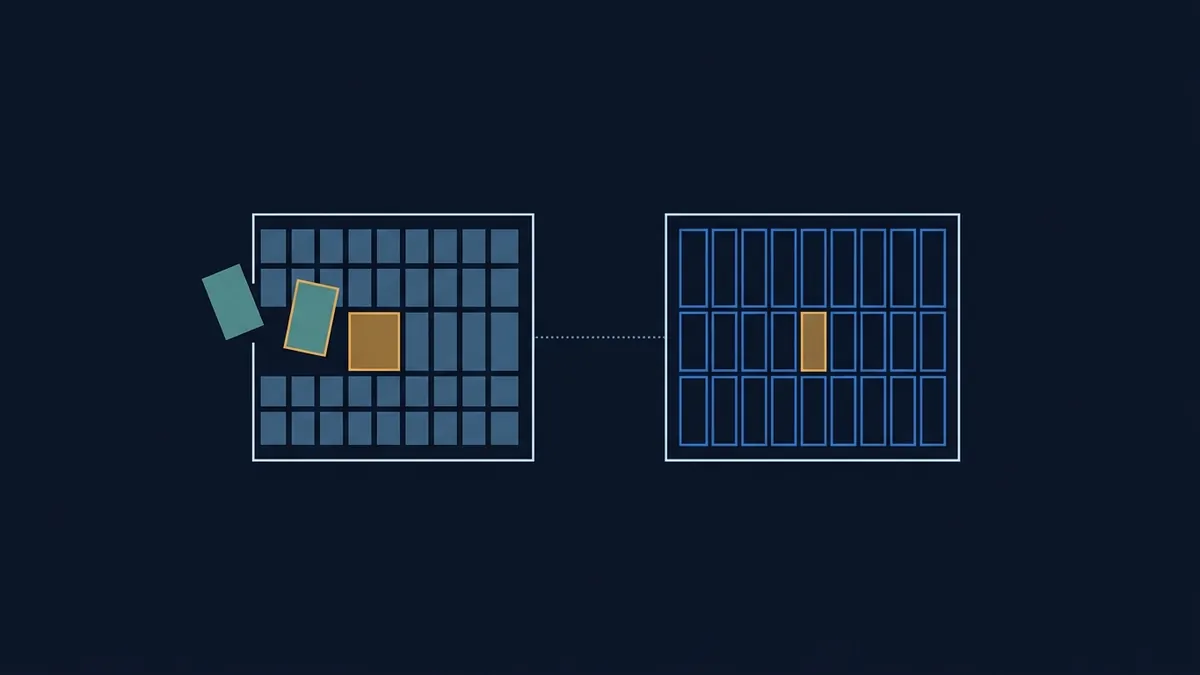
This is a touch market, not a settlement market. Each strike is its own yes-or-no contract asking whether SPY reached a given price at any point during June. An up strike resolves yes when a one-minute SPY candle high reaches or exceeds the level. A down strike resolves yes when a candle low reaches or falls to it. The strikes are independent. They are not mutually exclusive outcomes splitting one pool of probability, and their prices do not sum to one. A strike priced at 100 percent is not crowding out the others; it has already resolved, because SPY has already traded through that level this month. Reading the ladder as a distribution of implied probabilities that has to rebalance, with weight sliding from one rung to another, gets the mechanics backwards.
What June has already locked in
Several strikes are already settled. On the way up, the $750 and $760 strikes are resolved yes and closed, the market's record of the early-June high near 7,610 on the index. On the way down, the $740 and $730 strikes are also resolved yes and closed, marking the decline that carried SPY down to the $730 area, an S&P 500 around 7,300. So the realised June range is already on the board: the index has reached up to roughly 7,610 and down to around 7,300. Everything inside that band is decided. The only live questions are at the edges.
The live question on the upside: a fresh high
This is where the market is most emphatic. Above the June peak the ladder thins out fast (prices as of 11 June). The $770 strike, a fresh high the index has not yet made, is priced at 12 percent. The $780 strike is at about 5.5 percent. From $790 up the strikes sit in the low single digits: roughly 3.6 percent at $790, 3.3 percent at $800, and under 2 percent at $810. In plain terms, the market gives SPY about a one-in-eight chance of printing a new June high at 770, and treats anything beyond that as a tail. Whatever momentum carried the index to its early-June high, this contract does not expect it to produce fresh highs before month-end.
The other live edge: more downside
The downside ladder is the mirror image, and it is busier. The $720 strike, a level SPY has not quite reached, is priced at 80 percent: the market treats a dip into the low 7,200s on the index as the base case for the rest of the month. The $710 strike is roughly a coin flip at 58.5 percent. The $700 strike, a more serious drawdown, still carries about a 40.5 percent chance, and the $690 and $680 strikes below it are priced at 34 and 22.5 percent. Put the two edges together and the contract is not balanced. It prices a further leg down as far more likely than a fresh high.
The editorial read
Read correctly, the SPY June ladder is a modestly bearish picture for the back half of the month, and the reason matters. It is not that probability has drained out of the upside and pooled at the bottom. It is that SPY has already made its June high near 7,610, the market doubts it will be beaten, and it sees a retest of the lows as the more probable path from here. The settled strikes tell you where the index has been. The live strikes tell you that traders on this event contract expect the ceiling to hold and the floor to be tested.
The usual caveat applies. This is one venue's read on a single index question, and the right way to use it is as a cross-check against the futures curve and equity-options skew, not as a standalone forecast. The prices are a clean statement of how this particular crowd is leaning. They are not the last word.
At iPredicta we read these contracts the way they actually resolve, not the way they look at a glance, because a touch ladder and a settlement bet tell you very different things from the same set of numbers. On the SPY June question the honest summary is narrow: the early-June high is in, fresh highs are a long shot, and the market's live worry is the downside.

Frequently asked questions
Is this a bet on where the S&P 500 closes in June?
No. It is a set of touch contracts. Each strike resolves yes if SPY reaches that price at any point during June, regardless of where the index finishes the month. A strike can resolve yes on a single intraday move and stay resolved even if the index pulls well back afterwards. That is why several strikes are already settled at 100 percent: SPY has already traded through them.
Why are the lower strikes near 100 percent while the upper strikes are tiny?
Because SPY has already touched the lower and middle of its June range and has not yet made a fresh high above it. The $730, $740, $750 and $760 strikes are resolved yes because the index traded through those levels this month. The $770 and higher strikes are still live and priced low because a new high has not happened and the market doubts it will. The pattern is not a distribution summing to one; it is a record of what has been touched plus the odds on what has not.
What would make the upside strikes resolve yes?
A fresh June high. The $770 strike needs a one-minute SPY candle to reach or exceed 770, an S&P 500 around 7,700, before the end of the month. At 12 percent the market treats that as unlikely but not impossible. The strikes above it require progressively larger new highs and are priced accordingly.