Once a month, at 8:30 in the morning, a single PDF lands on the Bureau of Labor Statistics website and several billion dollars of positioning across rates desks suddenly looks either clever or stupid. The Consumer Price Index release is the closest thing the US data calendar has to a fixed drama. Traders watch the second decimal place. Mortgage pricing twitches off it. The Fed's whole communication strategy is built around managing the gap between what people expect that number to be and what it actually is.
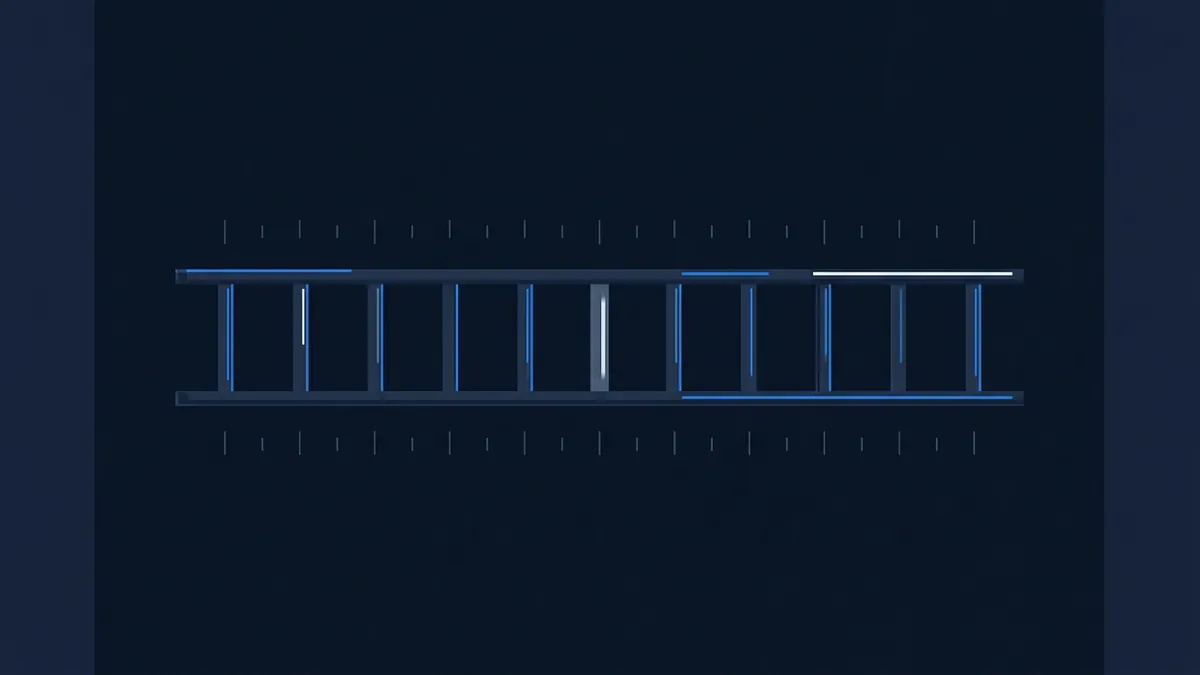
Now there is a contract on Polymarket asking the question directly, with no euphemism and no rates-curve translation layer: what will the year-on-year change in the US CPI be for the twelve months ending June 2026? The June Inflation US - Annual market on Polymarket settles on the BLS report scheduled for 14 July 2026. The ladder runs from a 3.6% floor up to a 4.7% ceiling, in tenths.
Deposit $20, get $50 to trade
Welcome bonus on the world's largest prediction market.
18+ · New users only · Availability and terms vary by region · Trading involves risk of loss · BeGambleAware.org
What the contract actually measures
The resolution rule is unusually clean for a macro question. It is the headline, not-seasonally-adjusted, year-on-year change in CPI for June 2026, taken from the BLS release on 14 July 2026. Not core. Not the Fed's preferred PCE measure. Not a six-month annualised reading. The plain headline number that goes on the front page of the BLS release, rounded as the BLS rounds it.
That rounding matters more than it looks. The contract pays a single rung. If the BLS prints 3.85% it goes to the 3.8% bucket or the 3.9% bucket depending on how the agency's own rounding falls, and one side of that boundary collects the whole stake while the other collects nothing. There is no partial credit for being directionally right. A trader who thinks inflation will land somewhere in the high threes has to decide which specific tenth to buy, or split a position across several.
That is why a ladder market like this is structurally more interesting than a binary. A yes-or-no contract on "will inflation be above 3.5%?" hides almost all the information about what traders actually expect. A twelve-rung ladder forces them to show their hand at the tenth-of-a-percent level. If you want to understand how that translation from price to view works in practice, our explainer on how prediction market odds work walks through it for ladder contracts specifically.
Where the lean sits
As of 26 June, the market shows a clear central tendency. The 3.8% rung is the favourite at around 52%, with 3.7% at 25% and 3.9% at around 10%. Everything above 4.0% is priced in low single digits or below one percent, and everything from 4.3% upward sits under one percent. The one rung that is no longer a rounding error is the low side: the ≤3.6% floor now carries almost 11%.
The shape is worth pausing on. Close to nine in ten of the contract's implied probability sits in the band from 3.7% to 3.9%, and most of that has concentrated on the 3.8% rung. The market is not split on whether inflation will be low or high in any dramatic sense. It has narrowed the question to whether the BLS will print a high three, settle on three-point-eight, or come in a touch softer. That is a tight pricing of the macro outlook for a number now less than three weeks from release.
Whether that tightness is justified is a separate question, and not one to answer with a directional thesis. The honest read is structural, and the structure has shifted. The upside remains thin: a print at 4.2% would be a serious miss against current pricing, with the 4.0%-and-above rungs trading in low single digits. The downside is no longer symmetric with it. The market now puts almost one chance in nine on a print of 3.6% or below, so a soft number has moved from rounding error to a live, if modest, outcome. The risk around the 3.8% favourite has become two-sided: a small upside miss, and a genuine floor beneath it.
Why a ladder contract is useful even if you never trade it
There is a reason rates strategists and policy reporters increasingly screenshot these markets even when they think the venues themselves are noisy. A ladder gives you the full distribution in one glance. You can see at once where the mode is, how wide the dispersion is, and how fat the tails are. None of that comes out of a single Bloomberg consensus number, which is just a mean and tells you nothing about whether forecasters agree or disagree violently.
It is also a useful sanity check against the soft-data narrative. If commentary on cable news is talking about a coming inflation scare, but the 4.0%-and-above rungs on Polymarket are collectively trading in the low single digits, those two pictures are not compatible. One of them is wrong. The market may not always be right, and there is a fair literature on why prediction markets are accurate and where the limits of that accuracy sit, but a wide gap between price and pundit is at minimum a flag worth checking.
One caveat is worth flagging. CPI is a number a lot of people care about for a lot of reasons, but US event contract access is uneven and the regulatory picture for retail participation in this kind of macro market is its own thing. The mechanics of what an event contract actually is and how the regulated venues handle them is the place to start if you want to understand the rails underneath.
The editorial take
The interesting feature of this contract is not where the lean is. It is how tightly the lean is held for a number due in under three weeks. The market is willing to commit to the second decimal place of a CPI print that lands on 14 July, with little hedging across the rest of the ladder. That conviction gets tested in a single morning rather than worn down over months. Either way, the ladder is doing what a good prediction market is supposed to do: turning a fuzzy macro debate into a price you can read in one line.
At iPredicta we track ladder contracts like this one across Polymarket and the regulated US venues, because the shape of the distribution often tells you more than any single headline price. The June inflation market is on the watch list precisely because the rungs are this tightly clustered, and the 14 July print will either vindicate that confidence or punish it in a single line.

Frequently asked questions
What exactly does the June 2026 inflation market resolve on?
It resolves on the year-on-year change in the headline, not-seasonally-adjusted US Consumer Price Index for the twelve months ending June 2026, as reported by the Bureau of Labor Statistics. The relevant release is currently scheduled for 14 July 2026 at 8:30 AM ET. The contract pays out on a single rung in tenths of a percent, with no partial credit for being close.
Why does the rounding rule matter so much on a ladder market?
Because each rung is exactly one tenth of a percentage point wide, a CPI print that lands near a boundary, say 3.85%, will fall entirely into one bucket and pay zero on the adjacent one. Traders who think inflation will land in a range still have to pick the specific tenth or split a position across rungs. It is a structurally different problem from a simple over-or-under bet.