Angela Rayner stood up to deliver her first major speech since Sir Keir Starmer announced he was going, and the pitch was unmistakable. Britain, she said, has "been on the wrong path for far too long." The frame was devolution, the reference point was Andy Burnham, and the audience was anyone still working out where the succession lands.
And yet if you toggle over to Polymarket's next UK Prime Minister in 2026 contract, the market barely registers the speech. As of 2 July, Burnham sits at 98%, essentially flat over the previous 24 hours. Every other named contender, Rayner included, is priced below 1%. That is not a race. That is a market that has already picked.
Deposit $20, get $50 to trade
Welcome bonus on the world's largest prediction market.
18+ · New users only · Availability and terms vary by region · Trading involves risk of loss · BeGambleAware.org
What Rayner actually said, and what the contract measures
Her speech, reported by the Independent, pitched her onto the same terrain Burnham has occupied for years: pushing power out of Whitehall, framing the current settlement as broken, borrowing the language of a "devolution revolution." It is a positioning move. Whether it is a leadership move depends on whether the succession that Starmer's resignation opens is a contest or a coronation.
Polymarket's contract does not care about positioning speeches. It resolves on one thing: the next individual officially appointed as Prime Minister by the Monarch before the end of 2026. Interim or caretaker figures do not count. That is a narrow, mechanical question, and it is the reason a speech about devolution can dominate a news cycle while the price of the person giving it stays flat on the board. If you want a primer on how these implied numbers actually translate into odds, our explainer on how prediction market odds work walks through the mechanics.
So the speech and the market are answering different questions. The speech asks: what does the next era of Labour thinking look like? The contract asks: who signs the letter to the Palace?
Why Burnham at 98% is a structural read, not a sentiment read
A 98% price on a single name, with every other contender under one percent, is not the market saying Burnham is the best candidate. It is the market saying it cannot see a plausible path to anyone else being formally appointed within the resolution window. That is a structural read, driven by the mechanics of what the contract measures and the calendar it measures over.
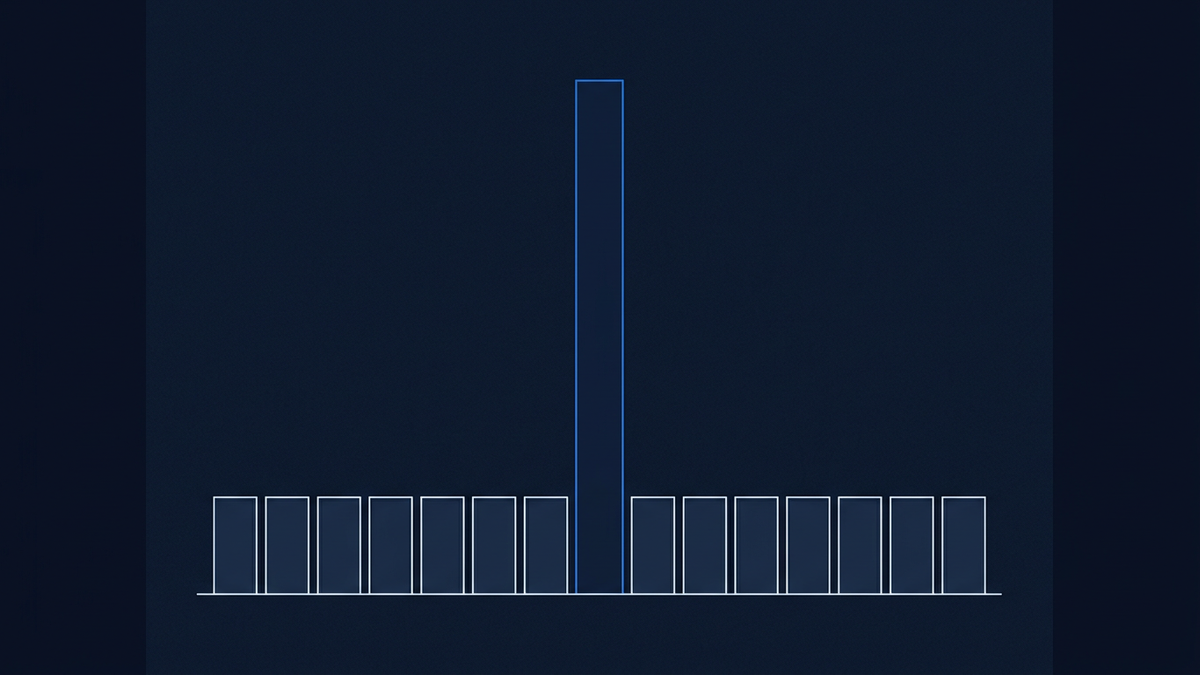
Contrast that with the shape of a genuinely open race. When the succession is contested, you see probability distributed across three or four names, each in the double digits, with the leader capped somewhere in the 30s or 40s. That is not what this market shows. It shows a single wall of price against a flat field. Even Rayner's speech, which is exactly the kind of event that would move a competitive contract, has not translated into a meaningful bid on her own name.
Which raises the more interesting question. What is the contract actually pricing in the tail? A 2% combined residual, spread across more than twenty listed names plus a "No Next PM in 2026" outcome, is doing a lot of work. Some of it is the possibility that no formal appointment happens inside the window at all. Some is the small chance that the succession, when it comes, produces a name currently priced at effectively zero. This is the sort of thin, high-conviction distribution where spotting a mispriced prediction market gets genuinely hard, because the wall of price on the favourite makes the other side of the trade look cheap without necessarily being wrong.
The gap between the speech circuit and the contract
Rayner's speech is the sort of thing that moves polling averages, dominates a Sunday politics show, and shifts the mood music around a party in transition. It is not, on the evidence of the last 24 hours, the sort of thing that moves this particular contract. That gap is worth sitting with.
Probability markets, when they are working well, aggregate what traders can actually see: declared runners, procedural constraints, calendar realities, the shape of the machinery that produces the next appointment. A speech about devolution changes the flavour of a leadership debate. It does not, on its own, change any of those mechanical facts. The market has looked at the mechanics and priced them accordingly.
That does not mean the market is right. It means the market is answering the narrow question in front of it, using the information it has, and the information it has right now points one way. When the mechanics shift, formal declarations, procedural triggers, the actual opening of a contest, the price will move. Until then, positioning speeches will look like weather on a very still day.
Worth flagging: at these price levels, the interesting trade is rarely the favourite. It is the question of whether the 2% combined tail is fairly distributed, and whether any of the sub-1% names have a real, if small, path that the market has under-weighted. That is a much harder read than backing Burnham at 98%, and it is where the actual work sits.
iPredicta tracks the UK political contracts across Polymarket and the regulated UK venues, and this next-PM market is the one we watch every time a senior figure steps up to a lectern. The gap between the speech and the price is exactly the kind of signal these contracts exist to produce.

Frequently asked questions
Why is one name priced at 98% when so many contenders are listed?
The contract resolves only on who is formally appointed Prime Minister by the Monarch before the end of 2026, with caretaker or interim figures excluded. That is a narrow mechanical question tied to a specific calendar. When traders cannot see a plausible procedural path to more than one named outcome inside that window, the price collapses onto the single name, even if the broader political debate is wide open.
Does a speech like Rayner's not count as market-moving news?
It counts as news, but not necessarily as news that changes what this contract measures. A positioning speech shifts the tone of a future leadership debate. This market prices the mechanics of an actual appointment inside a fixed window. Until the machinery of a formal contest engages, speeches tend to move mood rather than price. That gap between mood and price is a large part of why these contracts are useful.