A Berlin-based trader opens Polymarket, tries to place a position on a German federal election contract, and gets blocked at the geofence. A friend in Paris finds the same thing. Another in Madrid manages to deposit but worries, quietly, whether the winnings will ever leave the account cleanly. None of them are doing anything obviously criminal. None of them are entirely sure what the rules are either.
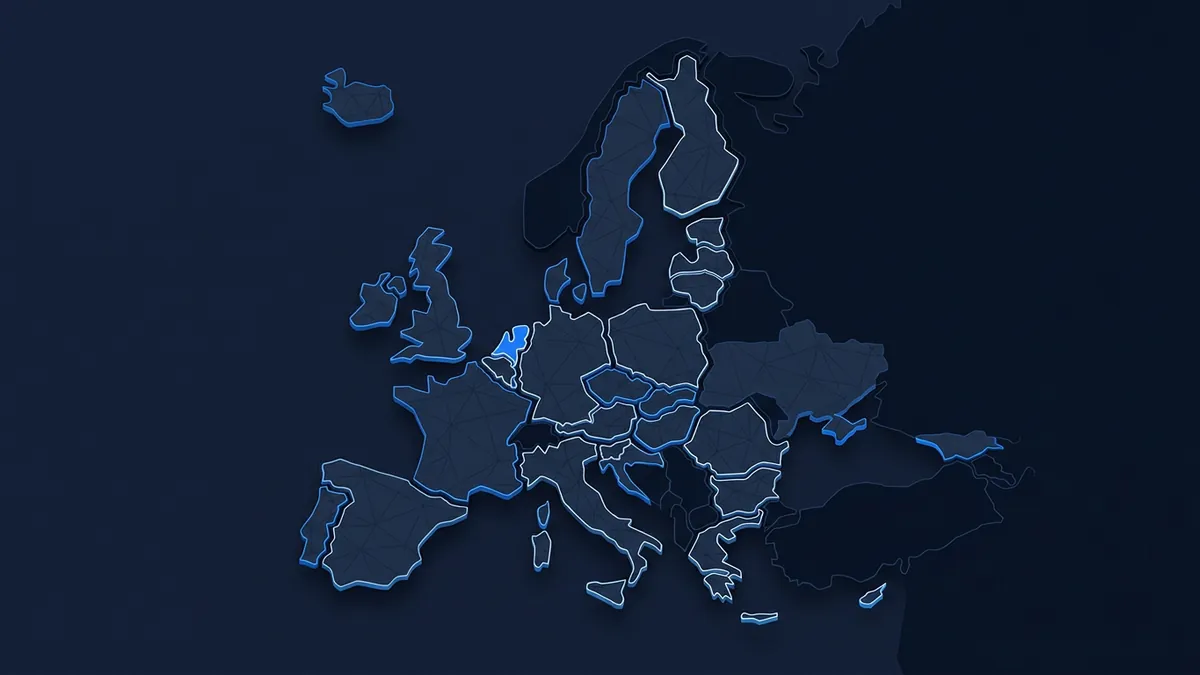
That confusion is the European prediction markets experience in one paragraph. The continent has no single answer, no master regulator, no clean yes-or-no. What it has is twenty-seven national gambling regimes, an overlapping EU financial-services rulebook, and a handful of offshore platforms operating in the grey space between them. The result is a landscape where the same contract can be perfectly accessible in one country, technically restricted in another, and actively prosecuted in a third.
Deposit $20, get $50 to trade
Welcome bonus on the world's largest prediction market.
18+ · New users only · Availability and terms vary by region · Trading involves risk of loss · BeGambleAware.org
The bottom line, before the nuance
There is no EU-wide ban on prediction markets, and there is no EU-wide licence to run one either. Gambling regulation in the European Union is a national competence, which means each member state writes its own rules about what counts as a bet, what counts as a financial instrument, and who is allowed to offer either to residents. The major offshore prediction venues, Polymarket chief among them, geoblock most EU countries as a precaution rather than because of a single binding ruling.
The practical reality for a European resident is closer to a patchwork than a prohibition. Some jurisdictions tolerate access. Some quietly ignore it. A few have explicit restrictions on event-based contracts that fall outside their licensed sports betting framework. The question is rarely "is this legal in Europe" and almost always "is this legal where I live, and through which venue."
Why the EU has no single rulebook here
Under Article 56 of the Treaty on the Functioning of the European Union, services should move freely across borders. Gambling is the persistent exception. The European Court of Justice has repeatedly accepted that member states can restrict gambling services to protect consumers, prevent fraud, and limit problem gambling, even when those restrictions look protectionist on paper.
The upshot is that the EU has spent more than a decade trying and failing to harmonise online gambling rules. The Commission's 2012 action plan promised closer coordination. In 2017, the Commission quietly closed its infringement proceedings against member states with restrictive gambling laws, effectively conceding the file. Today there is a mosaic of national licensing regimes, each with its own definitions of what is and is not a regulated bet.
Prediction markets sit awkwardly inside that mosaic. A contract on whether the European Central Bank will cut rates by a specific date looks, from one angle, like a derivative referencing macroeconomic outcomes. From another angle it looks like a fixed-odds bet on a future event. The category you land in determines whether MiFID II rules apply, whether a national gambling licence is needed, or whether the product is effectively unauthorised anywhere it is sold.
The MiFID II question, and why it matters
Financial markets in the EU are governed by the Markets in Financial Instruments Directive, known as MiFID II, which came into force in January 2018. Binary options, the close cousin of event contracts, were effectively banned for retail investors by ESMA, the European Securities and Markets Authority, in 2018. National regulators then made those bans permanent, country by country.
That history matters because it shapes how European regulators look at any product that pays a fixed amount on a yes-or-no outcome. The closer a prediction market contract resembles a retail binary option, the more nervous European supervisors get. Our guide to binary options versus event contracts walks through the structural similarities and the regulatory distinctions, which are sharper in the US than in Europe.
In the US, the Commodity Futures Trading Commission has carved out an explicit category for event contracts on regulated venues like Kalshi. Europe has not done that. There is no equivalent EU-level designation. A platform wanting to offer event contracts to EU residents either needs a national gambling licence in each market it serves, or it needs to position itself as a regulated investment firm under MiFID, which is a high bar with little appetite from supervisors for binary-shaped products.
A tour of the bigger national regimes
Germany rewrote its gambling treaty in 2021, creating a federal licensing regime via the Glücksspielbehörde, the new joint gambling authority based in Halle. Licensed operators can offer sports betting and online casino games, but event contracts on political or economic outcomes are not part of the licensed product set. A German resident accessing Polymarket is doing so outside any domestic licensing framework.
France is stricter. The Autorité Nationale des Jeux licenses a narrow set of products, primarily sports betting, horse racing, and online poker. The French regime is built on a closed-list philosophy: if a product is not explicitly authorised, it is not authorised. Prediction markets on elections, central bank decisions, or geopolitical events sit firmly outside that list.
Spain operates through the Dirección General de Ordenación del Juego, which licenses sports betting and casino products under a federal system that interacts with regional rules. Event contracts on non-sports outcomes are not licensed. Italy's ADM, the customs and monopolies agency, runs one of the more permissive European betting markets, with licences for fixed-odds betting on a wide range of outcomes, but again, the licensed catalogue does not extend to the broader event-contract universe.
The Netherlands, after a long delay, opened its regulated online market in October 2021 through the Kansspelautoriteit. The Dutch regulator has been notably aggressive about chasing unlicensed operators, with multimillion-euro fines for platforms serving Dutch residents without a local licence. A Polymarket-style venue would face the same enforcement risk.
Malta sits at the other end of the spectrum. The Malta Gaming Authority has historically licensed a broad range of remote gambling products, and an MGA licence carries real weight as a recognised regulated base. But it is not an EU passport: gambling has never had the cross-border licence portability that financial services enjoy under MiFID, so an operator still needs to satisfy each member state's national regime to serve its residents. Some prediction-adjacent products operate from Malta, but the MGA has not become a hub for event contracts in the Kalshi mould.
What European users actually do
Access in practice splits three ways. Some users in less actively-policed jurisdictions reach offshore venues through VPNs, which violates the terms of service of every major platform and creates real problems at withdrawal. Some use European-licensed sports betting exchanges, which offer markets on a narrower range of outcomes but with full regulatory clarity. And some use spread betting platforms in jurisdictions where that product is licensed, which is structurally different but covers some of the same ground.
The nearest European-licensed analogue to a prediction market is the betting exchange model pioneered by Betfair and now offered by venues like Smarkets. Our comparison of Smarkets and Polymarket goes into the mechanical differences, but the high-level point is that exchanges let users back and lay outcomes against each other under a gambling licence, which is regulatorily clean in jurisdictions that recognise the licence.
For UK readers in particular, the regulatory picture is sharper and worth reading separately. Our explainer on the UK position covers how the FCA and Gambling Commission have drawn the line between licensed sports betting and unlicensed event contracts.
The direction of travel
The interesting question is whether Europe ever gets a coherent framework. There are reasons to think it might, slowly. The European Commission's broader push on digital financial services regulation, including MiCA for crypto-assets and the ongoing review of MiFID, creates moments where event contracts could plausibly be brought inside a defined regulatory perimeter rather than left in the gap. The CFTC's increasing comfort with event contracts in the US is a reference point European supervisors quietly watch.
Working against that, the political mood across most of the continent is cautious about anything that looks like retail speculation on real-world events. The binary options ban left scars. Several national regulators have made clear they view prediction-style products through that lens, which is not a friendly starting point for any platform looking to enter the market.
A reasonable forecast is that the next few years bring more enforcement against unlicensed offshore access than they bring positive licensing frameworks. Europe is more likely to police the existing rules harder than to write new ones that welcome prediction markets in.

The practical takeaway
For a European resident reading this and trying to work out what to do, the answer is unsatisfying but honest. Check your national regulator's product list. If event contracts are not on it, the offshore venue you are eyeing is probably not licensed to serve you, regardless of whether the geofence happens to let you through. The legal risk to the individual user is typically lower than the risk to the platform, but the financial risk, particularly at withdrawal, is real.
The more durable path is through licensed venues operating in your jurisdiction, even if their product range is narrower. Sports outcomes are well-covered. Political and macroeconomic events, the bread and butter of US-style prediction markets, are not.
iPredicta tracks prediction market contracts across the major global venues and writes about how the regulatory perimeter shapes what European users can actually trade. The point of these guides is not to push anyone toward a particular platform, but to make the rules legible enough that readers can decide for themselves what is worth doing and what is not.
Frequently asked questions
Is Polymarket legal to use in the European Union?
Polymarket geoblocks most EU jurisdictions and does not hold gambling or investment-services licences in EU member states. That means access from inside the EU is generally outside any domestic licensing framework, even where individual users find the geofence permeable. The legal exposure typically falls on the platform rather than the individual, but practical problems show up at withdrawal, account verification, and tax reporting. For a clearer alternative, European users in licensed jurisdictions often look at regulated exchange-style products that operate under a national gambling licence, which cover a narrower set of outcomes but offer regulatory certainty Polymarket cannot.
Why does the EU not have a single rulebook for prediction markets?
Gambling is a national competence under EU law, not a single-market file. The European Court of Justice has consistently allowed member states to restrict gambling services on public-interest grounds, and the European Commission closed its infringement proceedings against restrictive national regimes in 2017. The result is twenty-seven separate licensing systems with different definitions of what counts as a regulated bet. Prediction markets sit awkwardly across that mosaic because they look partly like derivatives and partly like fixed-odds bets, and no EU-level category exists for them in the way the CFTC has carved out event contracts in the US.
Are there any European-licensed alternatives that look like prediction markets?
Yes, the closest analogue is the betting exchange model, where users back and lay outcomes against each other under a gambling licence. Betfair Exchange and Smarkets are the best-known examples, both licensed in jurisdictions including the UK. They offer markets on a much narrower range of outcomes than Polymarket or Kalshi, with sports dominating and political markets appearing around major elections, but the regulatory position is clean. Spread betting platforms cover some adjacent ground in jurisdictions where that product is licensed, though the mechanics are structurally different from yes-or-no event contracts.
Did the EU ban binary options, and does that affect prediction markets?
ESMA imposed an EU-wide temporary ban on the marketing, distribution, and sale of binary options to retail clients in 2018, which national regulators subsequently made permanent. Prediction market contracts are not formally classified as binary options, but they share structural features: a fixed payout on a yes-or-no outcome. European supervisors look at any product with that shape through a cautious lens shaped by the binary options experience. That history is the main reason no EU regulator has been keen to create a licensed home for retail event contracts, and it shapes how national authorities frame the question.
What is the safest approach for a European user interested in prediction markets?
Start with what your national regulator licenses, not what an offshore platform happens to let you sign up for. If event contracts on the outcomes you care about are not on the licensed product list in your country, an offshore venue is operating outside the framework that protects you, regardless of whether you can technically access it. Licensed exchanges and sports betting operators offer narrower products but clean withdrawals, tax reporting, and dispute resolution. For users who specifically want US-style political and macroeconomic markets, the honest answer is that European regulation does not currently provide a clean licensed route.