Marco Rubio told reporters at Hyderabad House in New Delhi on Sunday that "significant progress" had been made on a deal with Iran, that further news was expected within hours, and that the ultimate goal remained that Iran could never have a nuclear weapon. Donald Trump had pre-empted him from Truth Social the day before, posting that an agreement was "largely negotiated, subject to finalization" and that the Strait of Hormuz would be reopened. Iranian officials, within hours, told state media that "deep and significant" disagreements remained, with Tehran disputing the Hormuz characterisation. After three months of Iran war and seven weeks of fragile ceasefire, traders are pricing the gap between briefing and resolution. The Polymarket contract on the announcement date tells a more interesting story than the press conference.
Deposit $20, get $50 to trade
Welcome bonus on the world's largest prediction market.
18+ · New users only · Availability and terms vary by region · Trading involves risk of loss · BeGambleAware.org
What the market is actually pricing
The contract is a multi-outcome market asking on which date the US will officially announce either a ceasefire extension or a new diplomatic framework under which the ceasefire continues. The earliest bucket, May 23, has already resolved No. Roughly $1.58 million in volume sat there at the open and none of it paid out, which is a useful base rate for what the market thinks "imminent" means in practice.
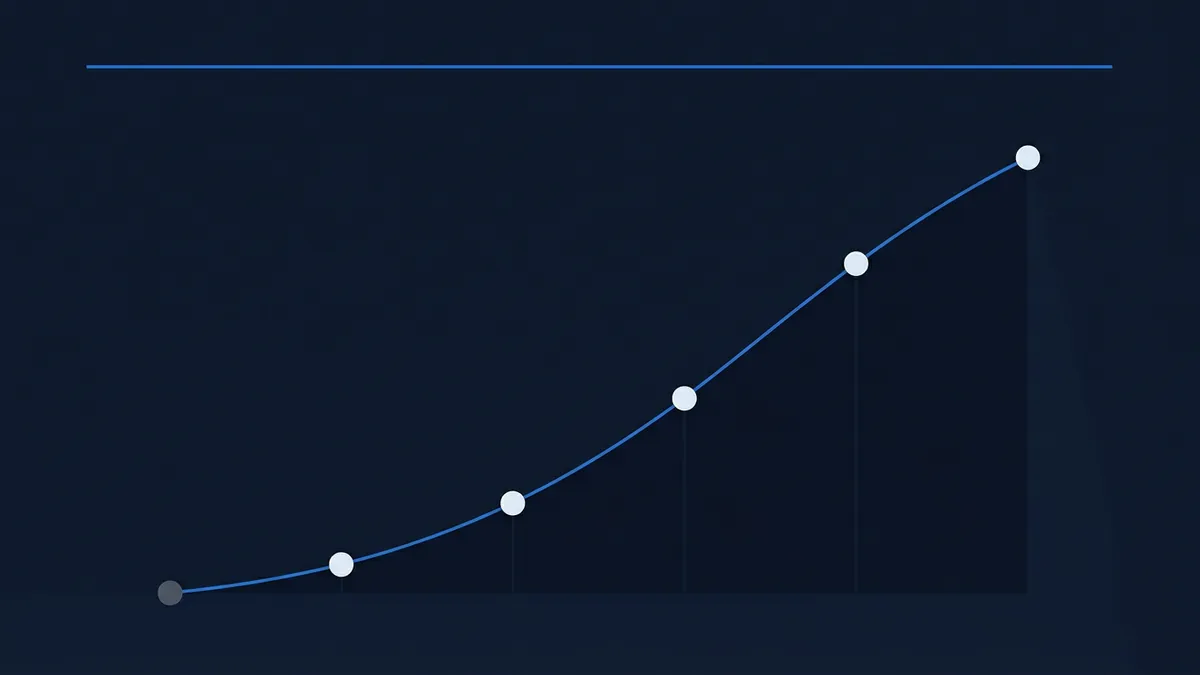
The buckets still trading sit at the following implied probabilities at the time of writing: today (May 24) at 51%, May 25 at 67%, May 26 at 73%, May 31 at 82%, and June 7 at 89%. Total market volume is $2.35 million. Most of the post-May-23 flow has concentrated on today's contract at $483,000. This is not a sleepy market. It is a market that has now traded through a presidential post, a Secretary of State press conference, and an Iranian counter-statement inside forty-eight hours.
The gap between today and next month
The number that matters is the spread. Thirty-eight points separate "today" from "by June 7." Markets do not usually run that wide on near-dated outcomes unless traders are pricing in something specific about why the announcement could slip even when both sides are publicly briefing that it is close.
The implied bet is straightforward. Traders broadly accept that a framework is coming. They are not convinced it lands today. The May 23 contract resolving No, after a full Saturday of headlines insisting that was the day, is the base rate the market is applying to Sunday. Trump's "largely negotiated" post did not trigger a Yes resolution under this market's rules, because announcing that a deal exists in draft is not the same as announcing the deal itself. The market is reading the rule book more carefully than the headlines are.
Where the risk sits is on the Hormuz question. Iran has spent the weekend disputing whether the Strait reopens at all, and under whose control it sits if it does. If that disagreement hardens over the next day, the 51% on today's contract moves sharply down before it moves up.
What the related markets say
Pakistan's army chief and Qatari negotiators have shuttled between Washington and Tehran for weeks; the deal that emerges is theirs as much as anyone's. Two other Polymarket contracts give useful triangulation. The first is the Hormuz blockade lift market, with $21.2 million in volume and a long historical tape of resolved-No dated outcomes stretching back to April. The market currently prices a May 31 lift at 67% and a June 30 lift at 85%. The same traders who are 89% confident on a ceasefire announcement by June 7 are only 67% confident that the US naval pressure actually comes off by then. The implied view is that the announcement comes first as a framework, and the blockade lift follows on a slower clock, probably as Iran makes verifiable moves on uranium and enrichment.
The second is a thin permanent peace deal market, trading at 72% Yes with about $2,700 in volume. Volume is light, so the price is more sentiment than signal, but the direction matches the rest of the book. Traders expect a real framework, not a face-saving non-deal that collapses inside a month.
What it takes to trigger Yes
The contract resolves Yes only on a specific kind of US government statement. A dated extension, a new framework under which the ceasefire continues, or an overwhelming consensus in credible reporting that one of those has been definitively reached. It does not resolve Yes on language that the ceasefire "remains in effect," that talks are "progressing," or that the parties are "getting closer." Trump's Saturday post, by that standard, was content rather than resolution. Rubio's "perhaps over the next few hours" lands in the same bucket.
UK readers should note that Polymarket itself is not directly accessible from the UK; the regulatory position is covered in our explainer on whether prediction markets are legal in the UK. What the prices tell you is still useful even if you cannot trade them.

The editorial take
The market is doing the job the press conference is not. Both Trump and Rubio have an incentive to brief that a deal is imminent, because the optics of "we are close" are better than the optics of "we are stuck." Traders putting real money on the date have an incentive to ignore the optics and look at the rule book. What they see is a real but slipping deal, with the Hormuz question as the load-bearing disagreement, and a wide enough probability cone over the next two weeks that anyone selling certainty is selling something the market itself is not buying. Live pricing on this and the related markets is on the iPredicta trending markets page and updates throughout the day.