Update, 19 September 2026. The week's ladder settled on 29 June 2026. Bitcoin dipped to at least $60,000 during the window, the lowest rung that settled Yes, and no upside rung settled at all. The analysis is left as it was written.
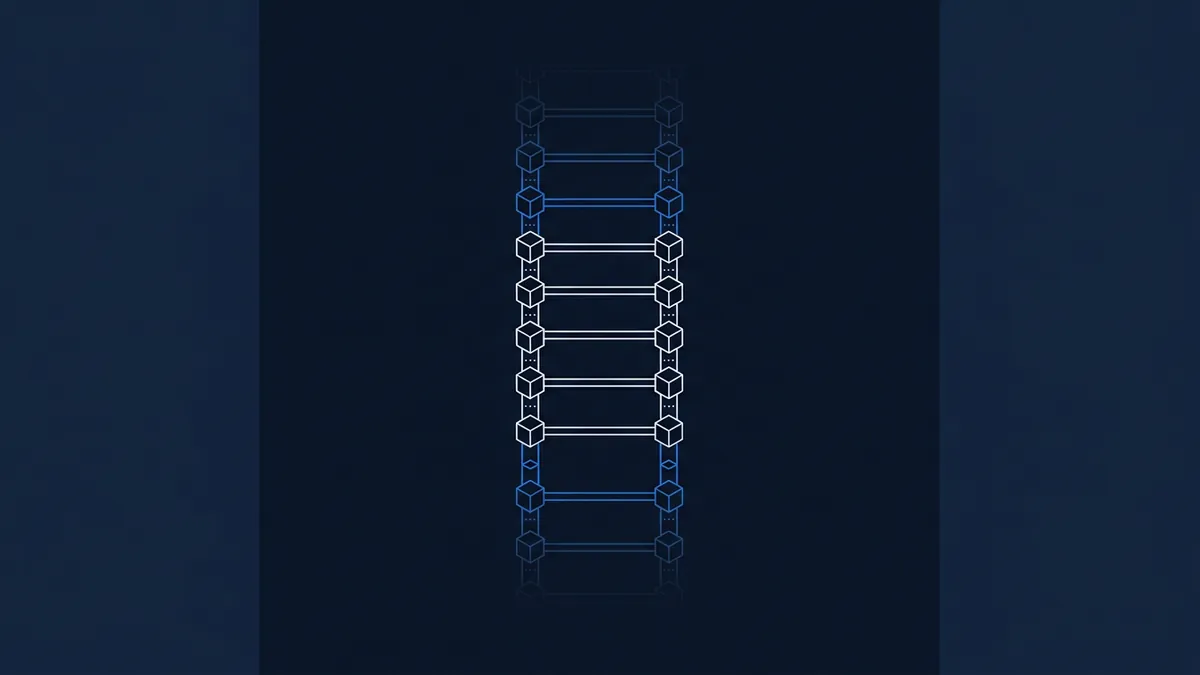
Every week, a quietly mechanical question lands on Polymarket and counts itself down: where does Bitcoin print between Monday and Sunday? Not where it closes. Not where it averages. Where it touches. The contract is a ladder of price rungs stacked above and below current levels, and whichever rung gets tagged during the week is the one that pays.
This week's edition, asking what price Bitcoin will hit between June 22 and 28, is now in its resolution window. The rungs run from the high seventies down to the low fifties, in two-thousand-dollar steps. By Sunday evening the contract will know its answer. Most readers arriving at it will, understandably, want to look at the prices and read a story into them. That is the part worth being careful about.
Deposit $20, get $50 to trade
Welcome bonus on the world's largest prediction market.
18+ · New users only · Availability and terms vary by region · Trading involves risk of loss · BeGambleAware.org
What the contract actually measures
Worth getting the mechanics straight before anything else. The market is not a forecast of Bitcoin's closing price for the week, nor of its average. It is a touch contract on a price ladder. Each rung, the 66,000 line, the 60,000 line, the 70,000 line and so on, resolves YES if Bitcoin trades at that level at any point during the 22 to 28 June window, and NO if it does not.
That distinction matters more than it sounds. A touch contract is fundamentally a question about the week's range, not its destination. Bitcoin could spend most of the week sitting at one level and still resolve a rung on the other side of the ladder if it briefly spikes or dips through it. The contract rewards volatility through specific price points, not direction.
The upshot is that the rungs are not mutually exclusive in the way a yes/no election market is. A week with wide intraday swings can resolve several rungs YES. A flat week resolves only the rungs the spot price has actually crossed. If you have come across how prediction market odds work in election or sports contexts, this is a different beast: the implied probability on each rung is the market's read on whether the price will reach that level at all during the window, not on whether it will be the only level reached.
Why the ladder shape is the interesting bit
Look at the ladder, not any single rung. The 22 to 28 June contract has rungs going up (the 66, 68, 70, 72, 74, 76 and 78 thousand levels) and rungs going down (the 62, 60, 58, 56, 54, 52 and 50 thousand levels). The arrows on the labels tell you the direction each rung represents from where the price sat when the contract was constructed.
That structure is the whole point. A ladder market lets traders price the full distribution of where Bitcoin might wander during the week, not just a single point estimate. As a snapshot on 23 June, the heaviest weight sits on the downside rungs closest to the spot price, with the 62,000 touch rung trading around 72%. The upside rungs price progressively lower the further out they go, and so do the deep downside rungs. That is the textbook shape of a probability distribution over a week's worth of price action: dense near the middle, thin in the tails.
What you should not do is treat any one rung in isolation as a thesis. The 66,000 upside rung sitting near 29% is not a forecast of where Bitcoin will close. It is the market's read on whether Bitcoin will tag 66,000 at any point in the week. Those are very different questions, and confusing them is the most common way readers misread weekly touch ladders.
How it resolves, and what to watch for
Three things settle the contract by Sunday. First, the price feed Polymarket uses (the contract specifies the resolution source in its rules; this is where any dispute would land). Second, the window itself, which closes at the end of 28 June. Third, the actual range Bitcoin prints across those seven days.
There is a particular kind of week that tests touch ladders. A quiet week with a single sharp move, in either direction, can resolve a rung that looked unlikely on Monday and leave more central rungs unresolved. A week of grinding drift can resolve a whole cluster of adjacent rungs. The shape of the resolution outcome tells you something about the week's character, not just its endpoint. Worth knowing for anyone tracking these contracts as a discipline rather than a one-off bet.
For readers newer to this mechanic, our explainer on what market resolution means in prediction markets covers the general principles. The touch-ladder structure is a specific variant of the broader category, and once you have seen one resolve, the rest of them read much more easily.
The editorial take
These weekly Bitcoin ladders are, structurally, the cleanest expression of a probability distribution that a prediction market offers retail traders. They are also the kind of contract that gets misread most often, because the impulse is to read a high probability on the nearest-rung as a price target rather than as a touch probability on a specific level. Treat the ladder as a shape, not as a list of forecasts, and the contract becomes much more legible.
iPredicta tracks these weekly Bitcoin price-ladder markets across Polymarket and the regulated venues, because the ladder shape itself tends to be more informative than any single rung's headline figure. The June 22 to 28 edition is on the watch list for exactly that reason.

Frequently asked questions
Can more than one rung on the Bitcoin weekly ladder resolve YES?
Yes. The rungs are touch contracts, so any rung Bitcoin reaches during the 22 to 28 June window resolves YES. A volatile week with wide swings can resolve multiple rungs on both sides of the current price; a flat week resolves only the levels Bitcoin actually trades through. They are not mutually exclusive in the way election contracts are.
Is the highest-probability rung a forecast of where Bitcoin will close the week?
No, and this is the most common misreading. Each rung's price is the market's view of whether Bitcoin will touch that level at any point during the week, not where it will end up. A rung trading at 72% is saying that level is likely to be tagged at some point, not that Bitcoin will close there. The ladder describes a range distribution, not a point estimate.