A ladder market is a strange thing to read once most of its rungs have already snapped. Five of the eight dates on Polymarket's Israeli parliament dissolution ladder have now resolved No. The two opening cutoffs from late 2025, together with the March, May and June 15 deadlines this year, are off the board, decided fact rather than open questions. What is left is a much narrower contract than the one traders started with.
Three dates remain in play, all in 2026: June 30, July 15, and July 31. Each live rung asks whether the sitting Knesset is dissolved by that date, with official Israeli government information as the primary resolution source. The ladder stretches back further than those three dates: its earliest rungs, which opened the contract back in 2025, have already resolved No. The live market is now just this short run of 2026 deadlines, and the dates are the rungs traders use to express how soon they think the trigger lands.
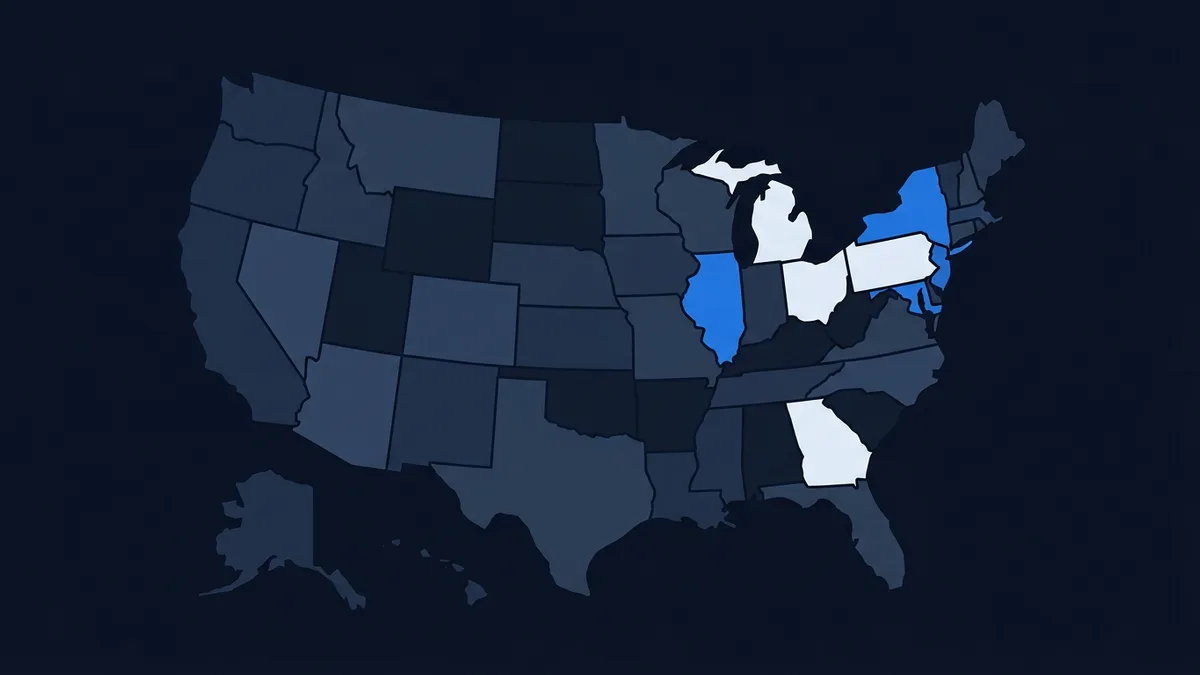
The real-world backdrop gives those dates their meaning. A bill to dissolve the Knesset cleared its first reading by 106 votes to nil on 2 June 2026, but the parliament has not actually been dissolved: further readings are still required, Benjamin Netanyahu remains prime minister, and the coalition is fractured rather than fallen. If a dissolution does clear before the Knesset's summer recess, the forced early election would most likely fall in the September-to-October 2026 window. That procedural clock is what the ladder's three live rungs are pricing.
Deposit $20, get $50 to trade
Welcome bonus on the world's largest prediction market.
18+ · New users only · Availability and terms vary by region · Trading involves risk of loss · BeGambleAware.org
What the ladder is actually measuring
The headline question, will the parliament be dissolved by date X, hides a more useful one. Each rung is really a bet on TIMING within the resolution window, not on whether dissolution happens at all. A trader buying the July 31 leg is saying it lands by then. A trader buying the June 30 leg is saying it lands sooner. The earliest cutoffs of all, back in 2025, asked whether dissolution would come almost immediately. It did not, and they resolved No.
That matters for how to read the live prices. As of 23 June 2026, Polymarket has July 31 trading around 62%, July 15 near 42%, and June 30 close to 21%. The market is telling a story about order, not about whether the underlying event ever occurs. The further out the rung, the more time it absorbs, which is why these ladders almost always slope upward as you walk down the dates.
There is a useful general point buried in there. Ladder contracts, especially the ones tracking a single trigger across a sequence of cutoffs, compress two questions, will it happen and when, into one price. Our explainer on how prediction market odds work walks through why that matters when you are reading any multi-leg contract.
Why five resolved legs reshape the contract
Once a leg resolves No, it does not just disappear. It removes a chunk of probability mass from the whole structure and forces the remaining rungs to carry whatever conviction is left. The October and December dates resolving No tell us something concrete: the parliament was not dissolved by those deadlines, full stop. Everything still trading has to fit inside a shrinking calendar.
That is why the three live rungs are now the entire market. June 15 has resolved No, so the soonest deadline still in play is June 30, and July 31 is the last rung the contract offers. The contract has effectively narrowed itself into a one-month window running from the end of June through July 2026. Anything that resolves Yes now must do so inside that month.
For anyone trying to extract signal from this, the structure is the load-bearing part. The contract is not a referendum on Israeli politics in the abstract. It is a stopwatch on a specific procedural event, with a resolution source, a window, and a set of cutoffs. Our piece on how prediction markets decide what counts as a Yes is worth reading alongside this if you want a sense of why the resolution wording does so much of the work.
What the live rungs can and cannot tell you
There is a temptation, when you see a 62% number, to read it as conviction. Resist that. A snapshot price is just a snapshot. It does not tell you who is on the other side, how much money sits at that level, or how stable the line is. On a settling ladder with only three rungs left, sensitivity is high: small moves on one leg often pull on the others, because the rungs are not independent guesses but sequential bets on the same event.
The more durable reading is the qualitative one. Polymarket currently has the latest live rung as the favourite, with the middle rung close behind and the earliest rung trailing. That ordering is what you would expect from a ladder where time is doing most of the work. It does not mean the market has called the outcome. It means the market is pricing later more generously than sooner, which is the default shape of any deadline ladder.
If you want to know what the contract is genuinely useful for, it is this. It gives you a clean read on how a discrete procedural event is being priced across a small set of dates, with a defined resolution source. That is a narrow thing, but it is a real thing. The wider question of why a parliament dissolves, and what happens after, sits outside the contract entirely.
The editorial take
Ladder contracts are at their most readable once they start resolving. Five legs down, three to go, with the live window squeezed into a single month. The interesting move from here is not whether one rung ticks a few points up or down. It is whether the remaining rungs resolve in order, which would confirm the market got the shape right, or whether one of them resolves Yes and the others collapse around it. iPredicta tracks settled-or-settling ladder markets like this one across Polymarket and the regulated venues, because the structure tells you more about how the contract behaves than any single price ever will.

Frequently asked questions
What does it mean that five legs of this market have resolved No?
Each leg on this ladder asks whether the Knesset is dissolved by a specific cutoff date. The two opening cutoffs from 2025, plus the March, May, and June 15 2026 deadlines, have all resolved No, meaning the parliament was not dissolved by any of them. Those outcomes are decided fact and no longer trade. Only the June 30, July 15, and July 31 2026 rungs remain live.
Why does the latest live date carry the highest price?
Ladder markets that track a single trigger across a sequence of deadlines almost always slope upward as you move further out. A later cutoff absorbs more time, which means more room for the event to occur. That is why a snapshot showing July 31 trading higher than June 30 is the expected shape, not a strong signal about how confident the market is in any specific date.