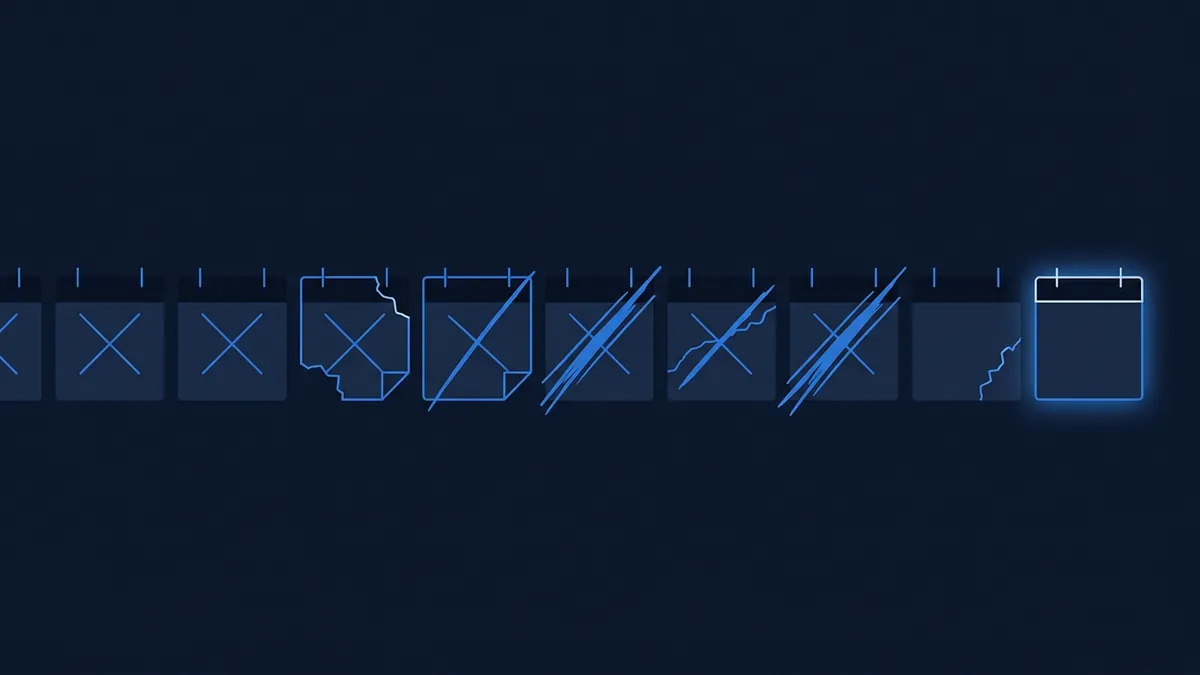
There is a particular flavour of crypto market that ages in public. You can watch it shed possibilities one calendar page at a time, each date passing without the thing happening, until what was once a wide field of guesses becomes a much narrower question. The Pump.fun airdrop contract on Polymarket is one of those.
As of mid-June 2026, seven of the dated outcomes on that market have already resolved no. The airdrop did not happen by June 30, July 18, July 31, August 31, September 30, or December 31 of 2025, nor by March 31 of 2026. That leaves one active leg sitting on the board: December 31, 2026, trading around 24% as of 15 June 2026. The structural question the market still poses is therefore much simpler than it was when it opened.
Deposit $20, get $50 to trade
Welcome bonus on the world's largest prediction market.
18+ · New users only · Availability and terms vary by region · Trading involves risk of loss · BeGambleAware.org
What the contract is actually still asking
With seven dated legs eliminated, the Pump.fun airdrop market on Polymarket has effectively collapsed into a single live question: does the airdrop land before the end of 2026, or not? Every other dated rung has been answered in the negative. They are decided facts now, not open guesses, and the contract is no longer a wide field of timing outcomes. It is closer to a one-question countdown.
That shift matters for how a reader should interpret the remaining number. A live leg at 24% in a market where seven other dates have already failed is not the same animal as a 24% leg in a fresh, fully-open ladder. The base rate has been carved out by the calendar itself. Every passing month from now until December narrows the runway for the event to occur within the bound, and the contract becomes more sensitive to news, not less. A single concrete signal from the project, a snapshot date, a token-generation event, a tier announcement, would move this kind of market hard. Silence pulls it the other way.
What the market cannot tell you is whether the airdrop happens at all. The active leg only covers calendar year 2026. If the team decides to push distribution into 2027 or later, the December 31, 2026 leg resolves no and the contract closes with no winning date. That is a real outcome shape for any airdrop where the timing has already slipped multiple times, which is exactly what the resolved legs above tell you has happened here.
Why airdrop-timing markets are structurally awkward
Airdrops sit in an unusual category for prediction markets. Unlike an election or a sporting fixture, there is no scheduled resolution date imposed from outside. The team decides when, and they can decide not to, and they can change their minds. That creates a market where the supply side of information is concentrated in a handful of people, mostly at the project itself, and where rumour, screenshotted Discord messages and founder tweets do far more work than fundamentals.
This is part of why airdrop markets tend to look the way this one does on the way out. Early dates carry optimistic pricing because traders extrapolate from project announcements and community chatter. Each passing deadline without an event is a hard fact that eliminates a leg, and the remaining legs do not necessarily reprice in a clean way, because the underlying signal has not changed, only the calendar has. The result is a market that ages into a much blunter shape than it started with. Worth flagging for anyone reading airdrop contracts for the first time. A wide field of dates can become a single binary very quickly.
The mechanics of how these things resolve are also worth understanding. If you want the longer version of why a contract's resolution rule is the load-bearing piece, our explainer on how prediction markets decide outcomes walks through the general shape. And if the underlying probability arithmetic is unfamiliar, how prediction market odds work covers the implied-probability translation in plain English.
What this market is useful for, and what it is not
A contract like this is most useful as a structured way to think about timing risk. If you follow the Pump.fun ecosystem and have a view on whether the team is closer to or further from a distribution event, the active leg gives you a clean expression of that view. It is not a market about whether the project succeeds, or whether the token is worth holding once it lands; it is a narrow timing bet, sharpened further by the legs that have already failed.
What it is not useful for is a generalised read on crypto sentiment or on Pump.fun's prospects. Airdrop-timing markets are noisy because they are dominated by a small number of project-side signals, and the absence of news pulls them lower mechanically as the calendar moves. Reading this contract as a referendum on the project would be a category error.
iPredicta tracks contracts like this one across Polymarket and the regulated venues, partly because settled-or-settling markets are where the structural shape of a contract matters most, and partly because they are where casual readers most often misread the remaining number. A 24% leg with seven resolved-no siblings is a different object from a 24% leg in a fresh market, and the difference is worth saying out loud.

Frequently asked questions
What does it mean that seven of the dated legs have already resolved no?
Each of those dates was a separate yes/no question about whether the airdrop happened by that point. When a date passes without the event, that leg settles no and is a decided fact, not an open probability. The seven eliminated dates simply narrow what the contract is still asking; only the December 31, 2026 leg remains live.
Does the live leg's price tell me how likely the airdrop is overall?
No. The active leg only covers whether the airdrop happens by the end of 2026. If the project pushes distribution into 2027 or beyond, that leg resolves no and the market closes without any winning date. The contract is a timing question with a hard cutoff, not a verdict on whether the airdrop ever occurs.