Update, 13 September 2026. The piece below set a test for itself: watch the turnover, then read the price. Four weeks on, read at 10:00 UTC on 13 September, the answer is closer to the structural reading than the other, with one caveat. Turnover returned. The Crowley contract had traded $172,504 over its life on 14 August and $311,034 by 13 September, so roughly $138,000 changed hands in the four weeks, against $1,948 in the day before the piece was written; the full market, both sides, went from $172,504 to $578,623. The price did not step when the volume arrived. It held at 77.5% through 21 August, moved to 80.5% on 22 August, reached 82.5% on 3 September and was 82.5% at the time of this update, bid 82 and offered 83. That is a five-point drift over a month, not a repricing on the return of interest, which is the shape the structural reading predicted. The caveat is the one the piece named in advance: a month is long enough for the general election itself to move a governor's contract, so the drift cannot be attributed to the primary and is not claimed for it. The reading on 13 September was a Sunday, with $528 traded on the Crowley side in the preceding twenty-four hours.
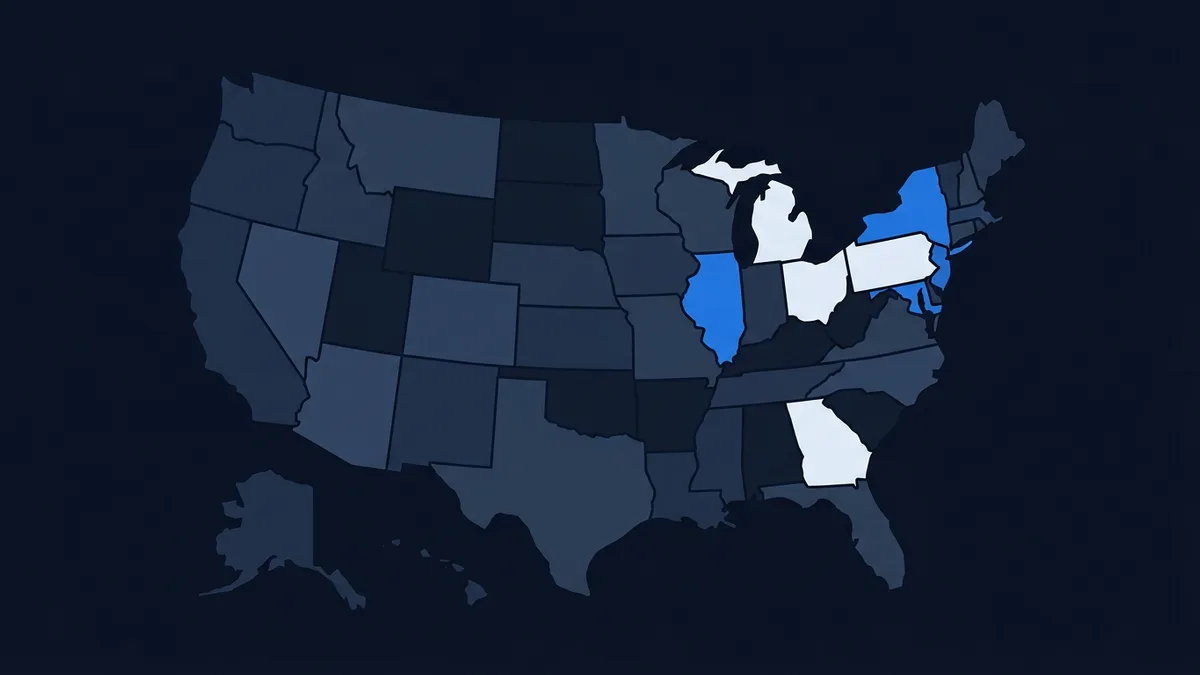
David Crowley is the Democratic nominee for governor of Wisconsin by four tenths of a percentage point. He took 39.8% of the primary vote to Francesca Hong's 39.4%, with 98% of the expected vote counted, and he got there by an unusual route: he had suspended his campaign and endorsed Lieutenant Governor Sara Rodriguez, then re-entered the race about ten days later, in mid-July, after Rodriguez withdrew over a campaign finance scandal. The outgoing governor, Tony Evers, endorsed him on his return.
Hong is a state representative from Madison and a democratic socialist who had repeatedly led public polling of the race. Crowley is the Milwaukee County Executive. Two candidacies about as far apart as a party primary offers, separated by a margin thinner than most polling error.
The prediction market that resolves on who actually becomes governor has traded $1,948 in the twenty-four hours to 09:20 UTC on 14 August.
Deposit $20, get $50 to trade
Welcome bonus on the world's largest prediction market.
18+ · New users only · Availability and terms vary by region · Trading involves risk of loss · BeGambleAware.org
The gap
The Wisconsin governor market on polymarket.com prices the Democratic side at 77.5% and the Republican side at 22.5% as of 09:20 UTC on 14 August 2026. The book is tight at those levels, bid 77 and offered 78 on the Democratic contract. They are the same levels it carried in a capture taken at 00:32 UTC the same morning.
We cannot tell you what it was priced at before the count, because nothing captured this contract until the morning of the 14th. What we can tell you is what it is doing now, and what it is doing now is almost nothing.
What the volume says, and what it does not
There is a structural explanation available, and it is a good one. The contract does not resolve on David Crowley. Read the rule and it resolves on the winner of the 2026 Wisconsin gubernatorial election, with a candidate counted as representing a party if they are that party's nominee, and it settles on the call made by the Associated Press, Fox News and NBC. It is a party contract. The nominee is the vehicle, not the subject.
On that account the market is behaving exactly as it should. If Wisconsin's general election leans Democratic by a fairly stable margin, then which Democrat carries the line is close to irrelevant to the question being priced, and a knife-edge primary between two Democrats is noise against a partisan baseline. Nothing the contract prices actually changed, so nothing needed to move.
That is a hypothesis, and the trading volume is the reason it stays one.
Under two thousand dollars a day
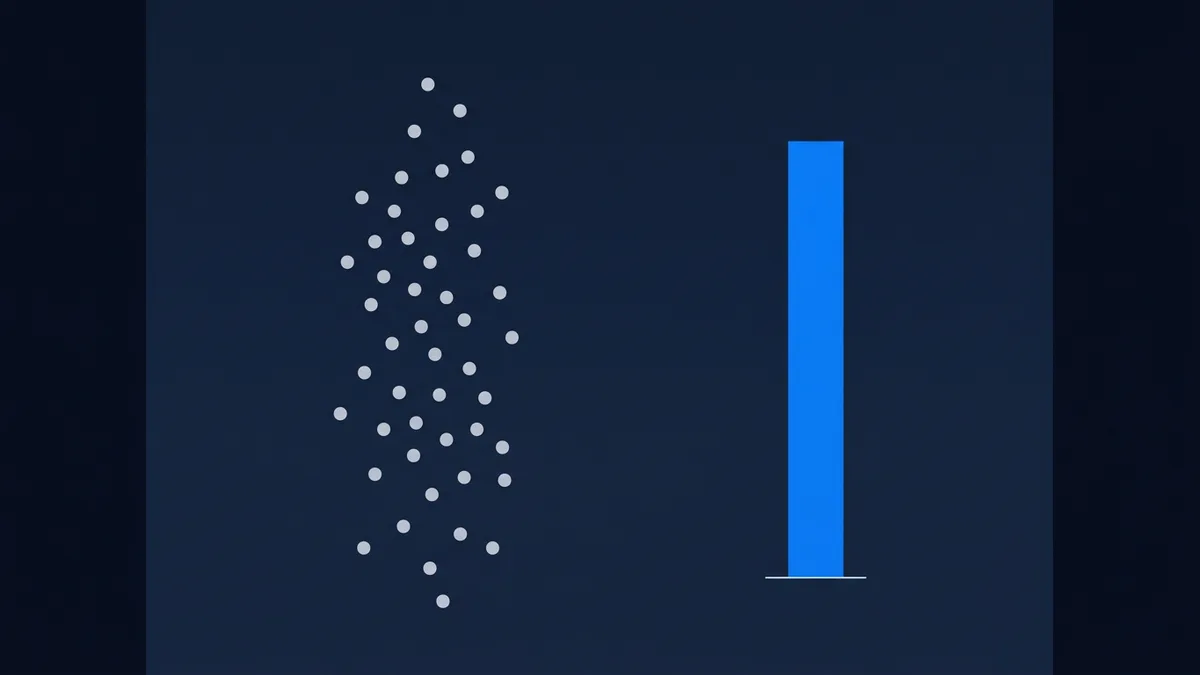
Turnover on the contract was $1,948 in the 24 hours to 09:20 UTC on 14 August 2026, a window covering the 13th and the early hours of the 14th. Across the contract's whole life it has traded $172,504.
Under two thousand dollars, two to three days after a photo-finish primary produced the nominee this contract is about, on a contract that has traded eighty-eight times that over its life. A market that had weighed the primary and concluded the nominee's identity did not matter would look like this. So would a market nobody has opened. The volume cannot distinguish them, and it is the only evidence available.
What it does rule out is the confident version of the structural story. You cannot say a market has judged something while it is barely trading. The sharper number would be turnover in the twenty-four hours straight after the count, and we do not have it: nothing captured this contract on the 11th or 12th. So what is demonstrated is that interest had not arrived by the 14th, not that it never will.
The same caveat sits on the 77.5% quoted at 09:20 UTC on 14 August. A price is a consensus only to the extent that people are actually transacting at it, and at these volumes a small number of tickets moves the number. If you want the mechanics, our explainer on what liquidity actually does to prediction market contracts covers why a thin book makes a price a weaker claim than it looks, and how prediction market odds work covers what the percentage is asserting in the first place.
The structural explanation may well turn out to be right. Wisconsin has elected Democratic governors recently and a partisan baseline is a reasonable thing to price. But a contract trading under $2,000 on 13 and 14 August has not demonstrated that it holds that view. It has demonstrated that it is quiet.
What would tell you which
The useful thing about a contract like this is that the question answers itself over the next few weeks, and cheaply. Watch the turnover first. If volume returns and the price stays near its 14 August level of 77.5%, the structural explanation was right and the market simply had nothing to do. If volume returns and the price moves, it had not repriced and the nominee's identity was worth something after all. If volume does not return at all, neither has been tested, and the number on the screen is worth exactly what a market with no participants is worth.
Either way the thing to watch is not the percentage on its own. It is the percentage together with the turnover, because the first without the second is a number rather than an opinion.
Crowley faces the Republican nominee, Representative Tom Tiffany, in November.

Frequently asked questions
How does the Wisconsin governor market resolve?
It resolves to the winner of the 2026 Wisconsin gubernatorial election. A candidate counts as representing a party if they are that party's nominee, and candidates running as independents are not covered by the Democratic or Republican options regardless of any affiliation. The resolution sources are the Associated Press, Fox News and NBC.
Does the market price David Crowley specifically?
No, and that distinction matters for reading it. The contract prices the party rather than the individual, with the nominee counted as that party's representative. That is part of why a very close primary between two Democrats need not move the general election price much: the question being priced did not change when the nominee did.
Is the 77.5% price a strong signal here?
Treat it carefully. As of 09:20 UTC on 14 August 2026 the contract had traded $1,948 in 24 hours against $172,504 over its lifetime, so the current price rests on very little recent activity. A thin book means a small number of tickets can move the number, and a price is only as informative as the trading behind it. That is not a criticism of the market so much as a reminder of what a quiet one can and cannot tell you.