
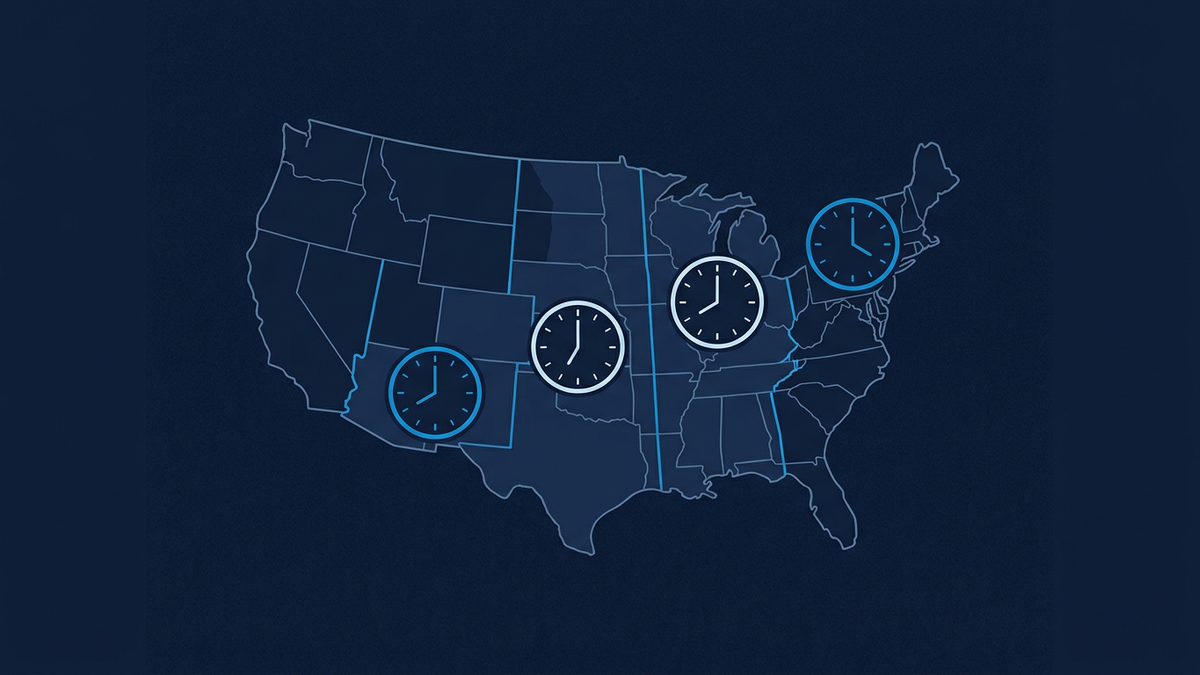
The first polls on election night close at 6 p.m. Eastern time on Tuesday 3 November 2026, which is 23:00 in the UK and 00:00 on Wednesday in Spain. The last polls, in parts of Alaska, close at 1 a.m. ET on Wednesday, which is 06:00 in the UK and 07:00 in Spain. In between, closings move west across the country over seven hours.
Checked on 29 October 2026.
This guide walks through when each state's polls close, which closings matter for control of the Senate and House according to The Hill's pre-election rundown, and what Kalshi and Polymarket actually do with their contracts while the votes are being counted. For the question of when payouts actually land, which is a separate matter from when a race is called, see our companion piece on when election prediction markets pay out.
Deposit $20, get $50 to trade
Welcome bonus on the world's largest prediction market.
18+ · New users only · Availability and terms vary by region · Trading involves risk of loss · BeGambleAware.org
Why the clocks matter this week
American clocks go back on Sunday 1 November 2026, two days before the election. The United Kingdom is already on GMT and Spain is on CET. That makes US Eastern time UTC-5, the UK UTC+0, and Spain UTC+1 on election night. So the UK is 5 hours ahead of New York and Spain is 6 hours ahead.
It is worth saying out loud because the gap has just changed. Before 1 November the UK was only 4 hours ahead of ET. If you are in London or Madrid and used to tracking US politics, add an extra hour to your mental model. Everything from 7 p.m. ET onwards falls on Wednesday 4 November for European readers.
The full poll-closing table
Times below are from The Hill's guide "2026 midterm elections: When polls close; when results are expected" (27 October 2026), with one exception: Nevada's closing time comes from the Clark County Registrar of Voters' official notice of the 3 November 2026 general election, which sets polls at 7:00 a.m. to 7:00 p.m. local Pacific time. The Hill's list leaves Nevada out; 7 p.m. Pacific time is 10 p.m. ET.
| US Eastern (Tue 3 Nov) | UK | Spain | Where polls close |
|---|---|---|---|
| 6 p.m. | 23:00 Tue | 00:00 Wed | Parts of Kentucky and Indiana |
| 7 p.m. | 00:00 Wed | 01:00 Wed | Georgia, South Carolina, Vermont, Virginia, the rest of Kentucky, most of Florida and New Hampshire |
| 7:30 p.m. | 00:30 Wed | 01:30 Wed | North Carolina, Ohio, West Virginia |
| 8 p.m. | 01:00 Wed | 02:00 Wed | Alabama, Connecticut, Delaware, Illinois, Maine, Maryland, Massachusetts, Mississippi, New Jersey, Oklahoma, Pennsylvania, Rhode Island, Tennessee, rest of Florida and New Hampshire, most of Texas, Michigan, Kansas and South Dakota |
| 8:30 p.m. | 01:30 Wed | 02:30 Wed | Arkansas |
| 9 p.m. | 02:00 Wed | 03:00 Wed | Arizona, Colorado, Iowa, Louisiana, Minnesota, Nebraska, New Mexico, New York, Wisconsin, Wyoming, rest of Texas, Michigan, Kansas and South Dakota |
| 10 p.m. | 03:00 Wed | 04:00 Wed | Montana, most of Idaho, the Mountain-time part of Oregon, and Nevada (per Clark County: 7 p.m. local) |
| 11 p.m. | 04:00 Wed | 05:00 Wed | California, most of Oregon, rest of Idaho |
| Midnight | 05:00 Wed | 06:00 Wed | Hawaii and most of Alaska |
| 1 a.m. Wed | 06:00 Wed | 07:00 Wed | The rest of Alaska |
Some states straddle time zones, so a state's last polls can close an hour after its first. The table covers the states carrying a Senate or governor race on our midterms hub.
Which closings matter for control
The Hill is explicit about the arithmetic. Democrats must flip four Republican-held Senate seats to gain control of the Senate. In the House, Democrats need to pick up three seats.
The Hill names North Carolina, Alaska, Maine, Texas, Ohio, Iowa and Kansas as Senate races in play for Republican-held seats. It names Georgia, Michigan and Minnesota as Democratic-held seats being defended. It flags South Carolina, Mississippi and Nebraska as longer shots. The Ohio and Florida Senate races are special elections, in both cases for seats held by appointed senators.
On the table above: North Carolina closes at 7:30 p.m. ET (00:30 UK, 01:30 Spain). Georgia closes at 7 p.m. (midnight UK, 01:00 Spain), as do South Carolina and most of Florida. Ohio joins the 7:30 p.m. cluster. Maine, Mississippi and most of Texas, Michigan and Kansas close at 8 p.m. Iowa, Minnesota and Nebraska come in at 9 p.m. Alaska is the long wait: midnight ET for most of the state, and 1 a.m. for the rest.
A closing time is when voting ends, not when a result is called.
When results actually come in
The Hill is similarly direct on counting speed. Florida, North Carolina, Georgia and Texas count relatively quickly. Michigan, Wisconsin and Pennsylvania can take longer, and if races there are close they may not be called until the next day.
California is the long tail. The Hill notes that California sometimes counts votes for weeks after the election, and that a close race there has been decisive for House control in both 2022 and 2024. A race that is not called on the night is often a race that is still being counted.
What markets do while the votes are counted
A share on a prediction market has a price between zero and one dollar, and that price is what traders will pay now for a contract that pays $1 if it settles YES. Trading continues through the night. As counties report and news outlets make calls, prices move. You can sell at the current price before settlement, or hold your position until the market resolves.
A projection by a news outlet is not a settlement. A market only settles when its own rules say so. The rest of this guide is about those rules, venue by venue and contract by contract, drawn from each market's own terms. For the broader frame see our explainer on how prediction market resolution actually works, and for the specific wrinkles around calls, recounts and certification see our guide to election payout timing.
How Kalshi's control contracts settle
Kalshi's "Who will control the Senate?" (CONTROLS-2026) and "Who will control the House?" (CONTROLH-2026) contracts run under one set of terms, Kalshi's CONTROL contract terms. The expiration date is February 1 in the year the new term begins; in this cycle that is 1 February 2027 at 10:00 AM ET. On that date, the market resolves on the party identification of the Speaker of the House (for the House contract) or the President pro tempore of the Senate (for the Senate contract), according to congress.gov.
That is the long route. The short route is accelerated determination. The CONTROL terms say the contract may be resolved early if at least four of the eight Designated Media Sources have declared a winning party, and none of them have issued a contradictory declaration. The eight sources are, per the terms: The New York Times, The Associated Press, Decision Desk HQ, CNN, Fox News, NBC News, CBS News, and ABC News. The terms specify that a source counts as declaring a winner when its centralised decision desk makes a formal projection, or when it publishes an unambiguous statement in a news article that the party has won. For the networks, a network and its local affiliates count as one source, and a national desk's call always supersedes an affiliate's.
So if four of those eight call Senate or House control for the same party on the night, with no contradictory call from another, the Kalshi contract may be resolved on that accelerated basis. If not, it runs to 1 February 2027 and the party of the Speaker or the President pro tempore on congress.gov.
How Kalshi's Georgia Senate contract settles
Kalshi's "Georgia Senate winner?" contract (SENATEGA-26) runs under Kalshi's SENATEPARTY contract terms. The payout criterion is the party of the first candidate who presents a certificate of election for the Georgia seat and is sworn into the US Senate for the term beginning in 2027. If a vacancy opens up after the election, the party of the person first sworn in as a temporary or permanent replacement counts.
The accelerated-determination clause mirrors the control contracts. The Georgia market may resolve early if at least four of the same eight Designated Media Sources, named again in the SENATEPARTY terms, declare a winner, and none of them contradict. Otherwise it expires at 10:00 AM ET after the swearing-in, or a year after the popular vote, whichever comes first.
How Polymarket's control markets settle
Polymarket's "Which party will win the Senate in 2026?" and "Which party will win the House in 2026?" markets each resolve according to the party that wins a majority of the chamber's voting seats. The resolution sources are official information from state electoral authorities, the United States Congress, and a consensus of credible reporting.
The tie rules are specific. In the Senate market, if no party wins a majority of voting seats, the party controlling the chamber is the one that wins half the voting seats and holds the Vice Presidency. If the outcome remains ambiguous after that, the chamber is deemed controlled by the party of the first selected President pro tempore of the Congress convening after the election. The House market says that if no party wins a majority, the chamber is controlled by the party of the first elected Speaker of the Congress convening after the election.
Runoffs for qualifying elections determine the seat even if they happen after November 2026. For seats contested in the election, the seat is attributed to the party under which the member was elected; party-switching between election day and the organisation of Congress does not change the attribution. Senators and representatives elected as independents who caucus with, or announce their intent to caucus with, a party are included in that party's count. If the caucus decisions of independents cannot be determined on election day, the market can stay open until the earlier of their announcement or 11:59 PM ET on 4 January of the following year. If still unknown, the member does not count toward any party's total.
How Polymarket's Georgia Senate market settles
Polymarket's "Georgia Senate Election Winner" market resolves according to the winner of the 2026 Georgia US Senate election, inclusive of any run-offs. Its resolution sources are named directly: the Associated Press, Fox News, and NBC. The market resolves once all three sources call the race for the same candidate. If all three have not called it for the same candidate, the market resolves based on the official certification.
That is a different trigger from Kalshi's four-of-eight rule, with a different list of sources. On the same race, one venue's market can have resolved while the other's is still trading.

Calls, prices and settlement on the night
A call by a news outlet can move prices, because traders react to it, but it does not by itself resolve a contract: each contract's own resolution rules do. If three networks call a race but Polymarket's text names a different three, its market keeps trading.
Frequently asked questions
What time do US polls close on 3 November 2026?
The first polls close at 6 p.m. ET and the last at 1 a.m. ET on Wednesday 4 November. In between, closings move west in staggered waves: 7 p.m., 7:30 p.m., 8 p.m., 8:30 p.m., 9 p.m., 10 p.m., 11 p.m., midnight and 1 a.m. ET. In UK time (GMT, 5 hours ahead) that is 23:00 Tuesday through 06:00 Wednesday. In Spain (CET, 6 hours ahead) it is 00:00 through 07:00 on Wednesday. Several states straddle time zones, so a state's last polls can close an hour after its first; the table above sets out the specific hours per The Hill's guide, with Nevada's close added from the Clark County Registrar of Voters' notice.
Does a news network calling a race mean my prediction market pays out?
Not on its own, no. A projection by a news outlet is not a settlement. Each market has its own resolution rules that specify which sources count, how many of them must agree, and whether a contradictory call blocks acceleration. Kalshi's CONTROL and SENATEPARTY terms require at least four of eight named Designated Media Sources to declare a winner, with none contradicting. Polymarket's Georgia Senate market requires AP, Fox News and NBC to all call it for the same candidate. Until its own trigger is met, the market keeps trading.
How does Kalshi decide the Senate and House control markets?
Both contracts expire on 1 February 2027 at 10:00 AM ET, when they resolve on the party of the Speaker of the House and the President pro tempore of the Senate as recorded on congress.gov. Before that, either market can resolve on an accelerated basis if at least four of eight Designated Media Sources call control for the same party and none contradict. The eight, per Kalshi's CONTROL terms, are The New York Times, The Associated Press, Decision Desk HQ, CNN, Fox News, NBC News, CBS News, and ABC News. If accelerated determination is not triggered, the contracts run to 1 February 2027.
How does Polymarket handle ties and runoffs in the control markets?
If no party wins a majority of voting seats in the Senate, Polymarket's rules deem control to go to the party that wins half the voting seats and holds the Vice Presidency. If the outcome is still ambiguous, control is determined by the party of the first selected President pro tempore. In the House, if no party wins a majority, control goes to the party of the first elected Speaker. Runoffs for qualifying elections determine the seat even if they happen after November 2026. Independents who caucus with, or announce they will caucus with, a party are included in that party's count; if a caucus decision cannot be determined on election day, the market can stay open until 11:59 PM ET on 4 January of the following year.
Which states should produce results fastest, and which ones take longest?
Florida, North Carolina, Georgia and Texas count relatively quickly, per The Hill's rundown, because most ballots are cast in person early or on election day with short windows for mail-in ballots to arrive. Michigan, Wisconsin and Pennsylvania can take longer, and if races there are close they may not be called until the next day. California is the extreme case: its results are sometimes counted for weeks after the election, and in 2022 and 2024 close races there were decisive for House control. A race that is not called on the night is often still being counted, and its markets keep trading while it is.