
Open a market on any betting exchange and the first thing you notice is that there is no bookmaker in the picture. The price you see has two sides, one slightly higher than the other, with stacks of money queued up behind each number. Those queues are other punters. You are not betting against the house; you are being matched against someone who thinks the opposite of what you think.
That is the whole idea of an exchange. It is also why the pricing feels tighter, the jargon feels stranger, and the concept of "laying" exists at all. For a UK reader who has only ever used a traditional bookmaker, the mechanics are worth learning once and properly, because the same logic sits behind every exchange market, from the Grand National to tomorrow's League One game.
Deposit $20, get $50 to trade
Welcome bonus on the world's largest prediction market.
18+ · New users only · Availability and terms vary by region · Trading involves risk of loss · BeGambleAware.org
Why there is no bookmaker in the middle
A traditional bookmaker sets a price, takes your stake, and carries the risk of paying you out. If the favourite wins and the bookmaker has taken too many bets on it, the bookmaker loses money. The odds are the bookmaker's product.
An exchange does not do that. It brings two users together and lets them bet against each other. One backs, one lays, the exchange sits in the middle and makes sure the money moves correctly when the result is in. The UK regulator has a name for this kind of operator: a remote betting intermediary. The Gambling Commission describes a remote betting intermediary licence as one that allows an operator to bring two or more betting parties together online in circumstances where it does not have liability for their bets, and notes that this is commonly known as a betting exchange.
That phrase, "does not have liability for their bets", is the whole business model in one line. The exchange is an intermediary. The liability sits with the users. Betfair (operated by TSE Malta LP) and Smarkets (operated by Smarkets (Malta) Ltd) both hold this licence category on the Commission's public register.
Backing and laying, explained without the jargon
Backing is the familiar bit. You pick an outcome, you stake some money, and if your outcome happens, you win at the price you took. Back Manchester City at 2.0 with twenty quid, City win, you get forty back (your original stake plus twenty of profit). This is what every high-street slip has ever done.
Laying is the unfamiliar bit. Laying means betting that something will NOT happen. If you lay Manchester City at 2.0 for twenty quid, you are effectively playing the role of the bookmaker for that bet. If City lose or draw, you keep the twenty. If City win, you have to pay out at 2.0, which means you lose twenty of your own money.
The key thing to grasp is that every back needs a lay on the other side, and vice versa. Your backed bet only exists because somewhere on the exchange, another user has agreed to lay it at the same price. If no one is willing to lay at your number, your bet just sits in the queue, unmatched.
How matching actually works
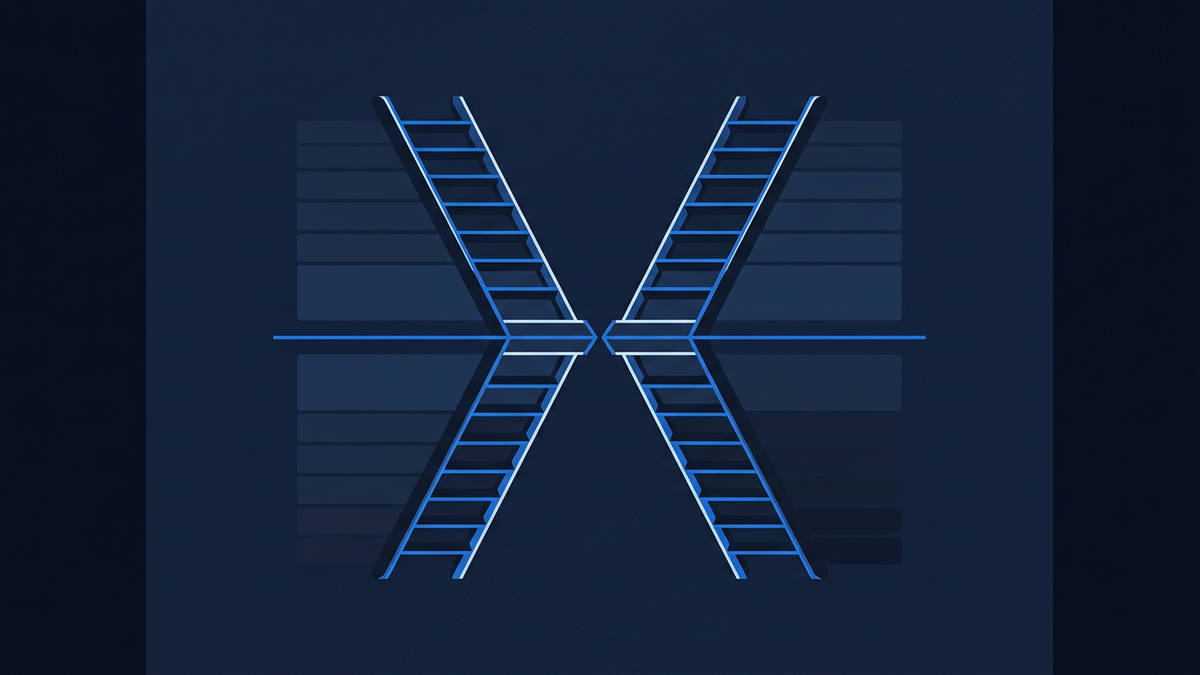
Picture a market like a pair of stairs facing each other. On one side, layers have placed orders saying "I'm willing to lay this at 3.4 for £80." On the other side, backers have placed orders saying "I want to back this at 3.5 for £50." Those orders wait in their queues, because the layers will not lay at more than 3.4 and the backers will not back at less than 3.5. A trade happens when a back and a lay meet at the same price.
So if a new user comes in wanting to back right now, they take the layers' best price, 3.4, and are matched instantly against the layer sitting there. A new user who wants to lay right now takes the backers' best price, 3.5. If the new backer wants more money on than the layer at 3.4 offered, the rest is matched against whoever is next in the queue, possibly at a worse price.
This is why the two numbers you see on an exchange, the back price and the lay price, are almost always slightly different. Here the back price shown is 3.4, the best price someone is offering you to back at, and the lay price is 3.5, the best price someone is offering you to lay at. The gap between them is the spread, and it is usually tiny on a busy market and wide on a quiet one. A deeper walk-through of this logic sits in our guide to how prediction market odds work, which uses the same mechanic in a different context.
Commission, the exchange's actual revenue
Because the exchange does not take the loss when you win, it does not get the upside when you lose either. It needs another way to make money. Exchanges do this by charging commission on net winnings. Lose a bet and you pay nothing extra. Win a bet and the exchange takes a small percentage of what you won.
Each exchange sets its own commission, and this guide does not quote a rate, so the only sensible move is to read the current schedule on the operator's own site before you place a bet. What matters conceptually is that commission is deducted from WINNINGS only, not from your stake. This is a very different cost shape to a bookmaker's built-in margin, where the cost is baked into the price whether you win or not.
This is also why serious exchange users watch the price closely: the figure that matters is the price after commission, compared like for like with any other quote.
Cash out, and what it actually does
Cash out is the feature that tends to confuse people the most, because it sounds like the exchange is offering you an early payout. It is not. It is doing something more interesting.
When you cash out, the exchange calculates what it would cost, at the current live prices, to place the opposite bet to the one you have open. If you backed a team at 4.0 and the team is now trading at 2.0, the exchange can lay them for you at 2.0, locking in a guaranteed profit regardless of the final result. The cash out button is doing that trade for you in one click, at the prices available at that moment.
Two things flow from this. First, cash out only works if there is liquidity on the other side at a sensible price. A thin market will give you a lousy cash out figure or none at all. Second, the price you get is the market price, not some number the exchange has invented. You could do the trade manually by placing the opposite bet yourself, and traders often do, because it gives them more control over size and timing. The mechanic is the same.
When the exchange model works and when it does not
Exchanges are at their best on big liquid markets. The Premier League, major horse racing festivals, big tennis finals, headline political contests. On those markets, the queues on both sides are deep, the spread between back and lay is narrow, and you can get matched instantly at a price close to true. The same model struggles on obscure markets. A Tuesday-night non-league game, an unfancied horse in a small race, a niche political question. The queues thin out, the spread widens, and you may find that no one wants to take the other side of your bet at any sensible price.
This is a general feature of user-against-user betting. It is also true on prediction markets more broadly, which our explainer on liquidity in prediction markets walks through in detail. The same question applies to any venue where your trade needs a counterparty: is anyone actually there to take it?
The other quiet feature of exchange betting is that you can trade in and out of positions as prices move, the way a stock trader would. Back at 4.0 before kick-off and, if the price shortens to 2.0, lay at 2.0 with the lay stake sized so that you keep a profit whichever team wins. With equal stakes on both bets, the profit comes only if your team wins. This is a different activity to picking winners. It is closer to short-term trading, and it is the reason the serious exchange crowd talks about "trading" rather than "betting" at all.

Where this sits in UK betting
The wider context worth holding onto is that exchanges are one shape of regulated UK betting among several. Event contracts of the kind traded on US venues have no direct UK equivalent that an ordinary punter can use, a point our guide to prediction markets law in the UK sets out in more detail.
For most UK readers, the practical upshot is simple. If the market is liquid and you understand the price you are getting after commission, an exchange is a sharp tool. If the market is thin, or if you want to bet without thinking about the mechanics, a traditional bookmaker does something different and simpler. Neither is wrong. They are different products built to different shapes.
Frequently asked questions
What is the difference between a betting exchange and a bookmaker?
A betting exchange matches two users against each other, while a bookmaker takes your bet directly and carries the risk itself. On an exchange, the operator is what the Gambling Commission calls a remote betting intermediary: it brings two parties together without liability for their bets. That is why exchanges let you "lay" an outcome (bet against it happening). The exchange earns money through commission on net winnings, not through a built-in margin in the price. The practical difference for a punter is that the price you see on an exchange is set by other users, not by the operator, and will move as money comes in on either side.
What does it mean to "lay" a bet?
Laying a bet means betting that something will NOT happen, effectively playing the role of the bookmaker for that specific outcome. If you lay Arsenal to win a match at odds of 3.0 for £10, you keep the £10 if Arsenal lose or draw, but you have to pay out at 3.0 (a liability of £20) if Arsenal win. Every laid bet on an exchange is matched against someone else who is backing the same outcome at the same price. Laying is the feature that makes exchanges different from traditional bookmakers, and it is what opens up strategies like trading in and out of a position as the price moves during a match.
How much commission does Betfair Exchange charge?
Each exchange sets its own commission and it can change over time, so this guide does not quote a rate: check the current figure on the operator's own site before placing a bet. The general principle is consistent: commission is charged only on your net WINNINGS on a market, not on your stake and not on losing bets. If you lose, you pay nothing beyond the stake. If you win, a percentage of your profit on that market is taken by the exchange. Because the cost shape is different to a traditional bookmaker's built-in margin, serious exchange users always calculate the effective price after commission before comparing it to a bookmaker's quote.
Is cash out a guaranteed amount?
The cash out figure is based on live prices in the market and is only available if there is enough liquidity on the other side to execute the trade. When you cash out, the exchange places the opposite bet to your open position at the current best available price, locking in whatever profit or loss that trade produces. On a liquid market like a Premier League game, the figure will usually be close to the fair value of your position. On a thin market, the cash out offer may be poor or unavailable, because there is no one on the other side willing to take the trade at a sensible price. You can also do the same thing manually by placing the opposite bet yourself.
Is a betting exchange legal to use in the UK?
Betting exchanges that hold the right UK licence are legal to use. The Gambling Commission issues a remote betting intermediary operating licence specifically for this model, which allows an operator to bring two or more betting parties together online without having liability for their bets. The Commission's public register lists TSE Malta LP, trading as Betfair, and Smarkets (Malta) Ltd as holders of this licence category. That means both operate under UK gambling regulation when offering their exchange products to UK customers. This is a separate regulatory category from traditional bookmakers and from US-style event contract venues, which have no direct UK equivalent that an ordinary punter can access.
18+. Please gamble responsibly: BeGambleAware.org