
How to read and trade
The mechanics: what a price means, how odds become probabilities, how markets settle, and how liquidity, volume and fees change what you pay. Start here if you are new, then move on to strategy.

27 guides
How Bitcoin Price Prediction Markets Work: Strikes, Brackets and Settlement Prices
Bitcoin prediction markets settle on a specific price feed at a specific time. Here is how strikes, brackets, close prices and touch windows actually resolve.
Read the guide →
What Is Open Interest in Prediction Markets, and How Is It Different From Volume?
Open interest counts contracts still outstanding; volume counts contracts traded. Here is what each reveals about a prediction market, and why mixing them misreads it.
Read the guide →
Overtime, Postponements and Voids: How Sports Prediction Markets Settle
How NFL game markets on Kalshi, polymarket.com and Polymarket US settle overtime, ties, postponements and cancelled games, with each venue's rules quoted as written.
Read the guide →
What 'Volume' Actually Means on a Prediction Market
On Polymarket, the dollar-sign volume figure is a share count, not cash. Here's what it really measures, and why the cash was smaller on every market we checked.
Read the guide →
How a Betting Exchange Works: Betfair Exchange, Commission and Cash Out
A plain-English guide to how a betting exchange works: backing, laying, matching other users, cash out, and the UK licence that makes Betfair Exchange different.
Read the guide →
Election Night 2026: When Polls Close, and What Prediction Markets Do With the Results
Poll closing times for the 3 November 2026 US midterms in ET, UK and Spain time, plus how Kalshi and Polymarket actually settle their control markets.
Read the guide →
When Do Election Prediction Markets Pay Out? Calls, Recounts and Certification
When do election prediction markets actually pay out? A plain-English guide to how Polymarket and Kalshi resolve US election contracts, and why dates differ.
Read the guide →
How to Withdraw From Kalshi
How to withdraw from Kalshi by debit card, bank transfer, PayPal, Venmo, crypto or wire: timings, fees, limits and holds, checked against Kalshi's help centre.
Read the guide →
What Is an Event Contract? The Regulated US Term for Prediction Market Bets
Event contracts are the CFTC-regulated form of prediction market bet. What they are, how Kalshi lists them, and the legal fights still shaping where they can trade.
Read the guide →
Prediction Markets for Entertainment Awards: Emmys, Globes, Grammys and Oscars Explained
How prediction markets price the Emmys, Golden Globes, Grammys and Oscars, where the probabilities come from, and what traders should know before betting.
Read the guide →
What Are Oracles in Prediction Markets? Inside Polymarket's UMA Resolution System
How oracles decide who wins on Polymarket, Kalshi and other prediction markets. UMA, dispute windows, and why resolution is the riskiest part of every trade.
Read the guide →
What Are Conditional Markets? Polymarket's If-Then Contracts Explained
Conditional markets let traders price 'if X, then Y' scenarios. Here's how they work on Polymarket, why they matter, and where they break.
Read the guide →
How to Spot Mispriced Prediction Markets: Where Inefficiencies Hide
A practical guide to spotting mispriced prediction markets, from stale liquidity and resolution ambiguity to the corners where smart money still finds edge.
Read the guide →
Prediction Market Trading Strategies for Beginners: Five Approaches That Actually Work
Five prediction market trading strategies that suit beginners, from probability gaps to liquidity plays, with worked examples and the risks nobody flags.
Read the guide →
How to Make Money on Prediction Markets: The Realistic Guide for New Traders
How to make money on prediction markets, honestly. The edges that exist, the ones that don't, and what a realistic returns profile actually looks like.
Read the guide →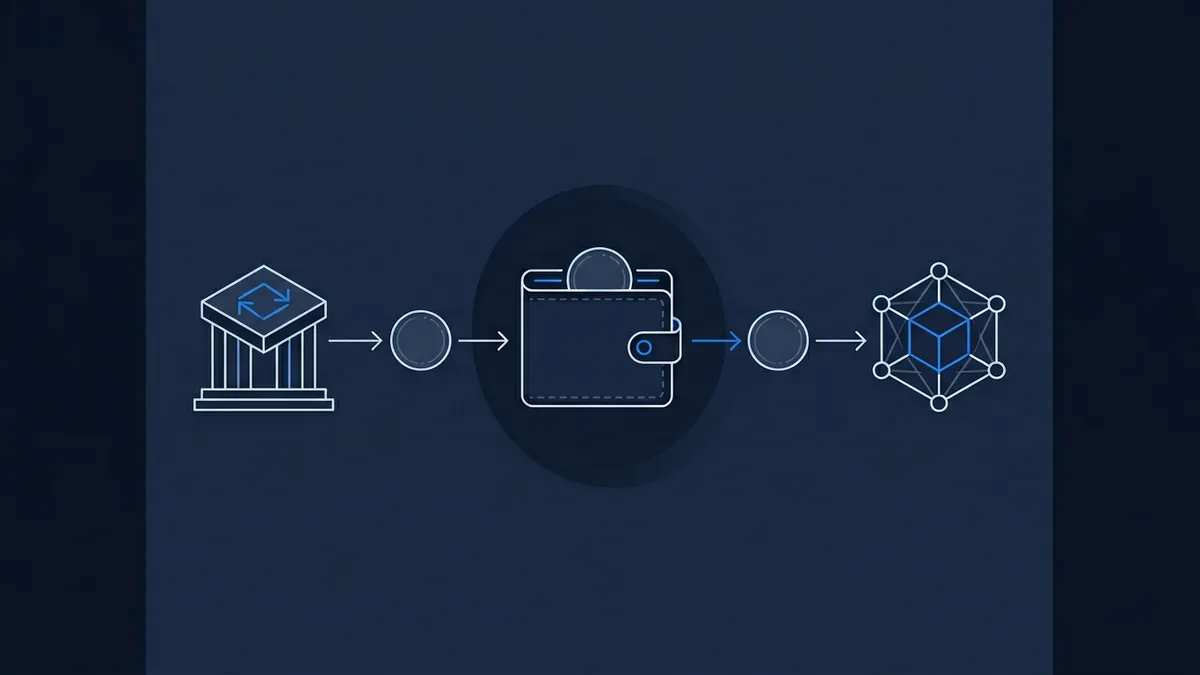
How to fund a Polymarket account with USDC: the practical guide for new prediction market traders
A step-by-step walkthrough on how to fund a Polymarket account with USDC from a UK or US start: wallet setup, the Polygon network, exchanges, and fees.
Read the guide →
How World Cup Group-Stage Tiebreakers Actually Resolve, and What Prediction Markets Do With Them
The 2026 World Cup tiebreaker order changed: head-to-head now beats overall goal difference. Here is how it works and why prediction markets price it.
Read the guide →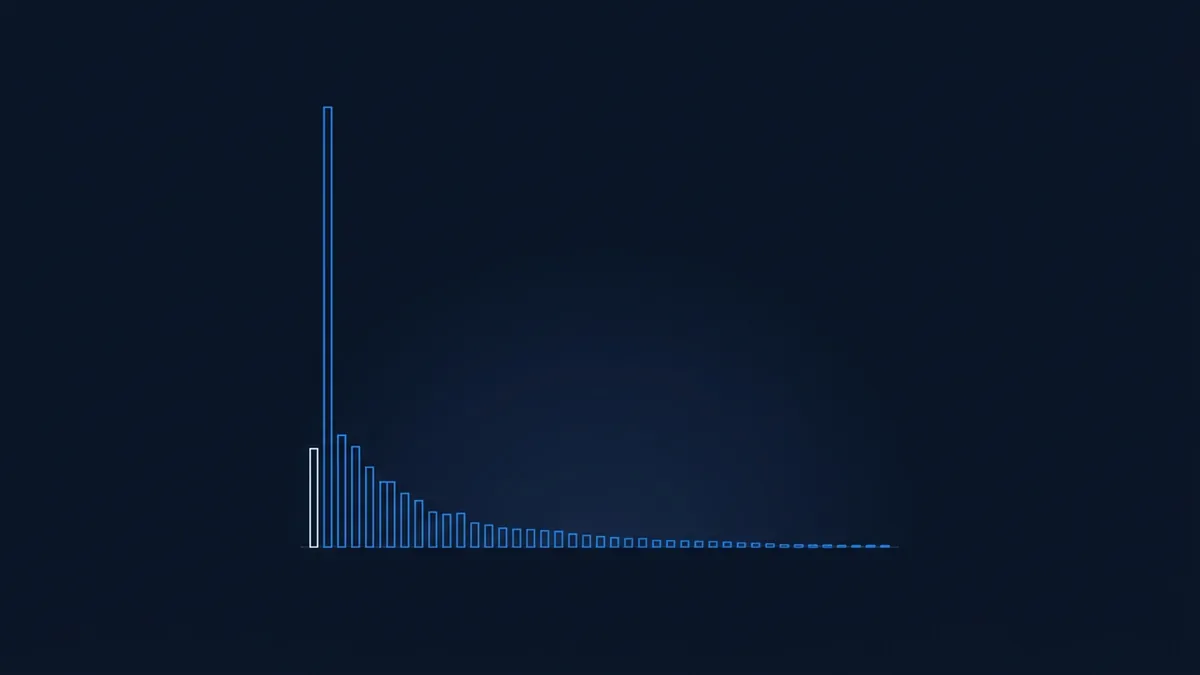
Who Wins on Prediction Markets? 1% Take 76.5% of Gains
A 2026 study of $67bn in Polymarket trades finds 1% of users capture 76.5% of gains. Here is what separates the winners from the losing majority.
Read the guide →
How to Place Your First Prediction Market Trade: A Beginner's Walkthrough
A practical, step-by-step guide to placing your first prediction market trade, covering Kalshi for US users and the UK-licensed alternatives that actually work.
Read the guide →
How to Read Kalshi Odds: Understanding Event Contract Pricing
Learn how to read Kalshi odds, decode cent-based contract pricing, and translate Yes and No quotes into the implied probabilities they really represent.
Read the guide →
How to Open a Kalshi Account: A Step-by-Step Guide for US Traders
A practical walkthrough for opening a Kalshi account in the US: sign-up, ID verification, funding, fees, and the common mistakes that slow new traders down.
Read the guide →
What the Prediction Markets Expect From the 2026 World Cup
Pre-registered prediction market baseline for the 2026 World Cup: outright winner, finalists, all 12 group winners and golden boot. As of 11 June 2026.
Read the guide →
Yes Shares vs No Shares: How Binary Prediction Markets Actually Work
Yes shares vs no shares in prediction markets: how the two sides of a binary contract are priced, settled, and why the maths always adds to a dollar.
Read the guide →
What Is Liquidity in Prediction Markets? Why Some Contracts Are Thin and What That Means for Traders
Liquidity in prediction markets decides whether your trade fills at a fair price or moves the market against you. Here's how it works and why it matters.
Read the guide →
What Is Market Resolution? How Prediction Markets Decide Winners
Market resolution is how prediction markets settle: the moment a contract pays out 100 cents or zero. Here is exactly how it works, and where it goes wrong.
Read the guide →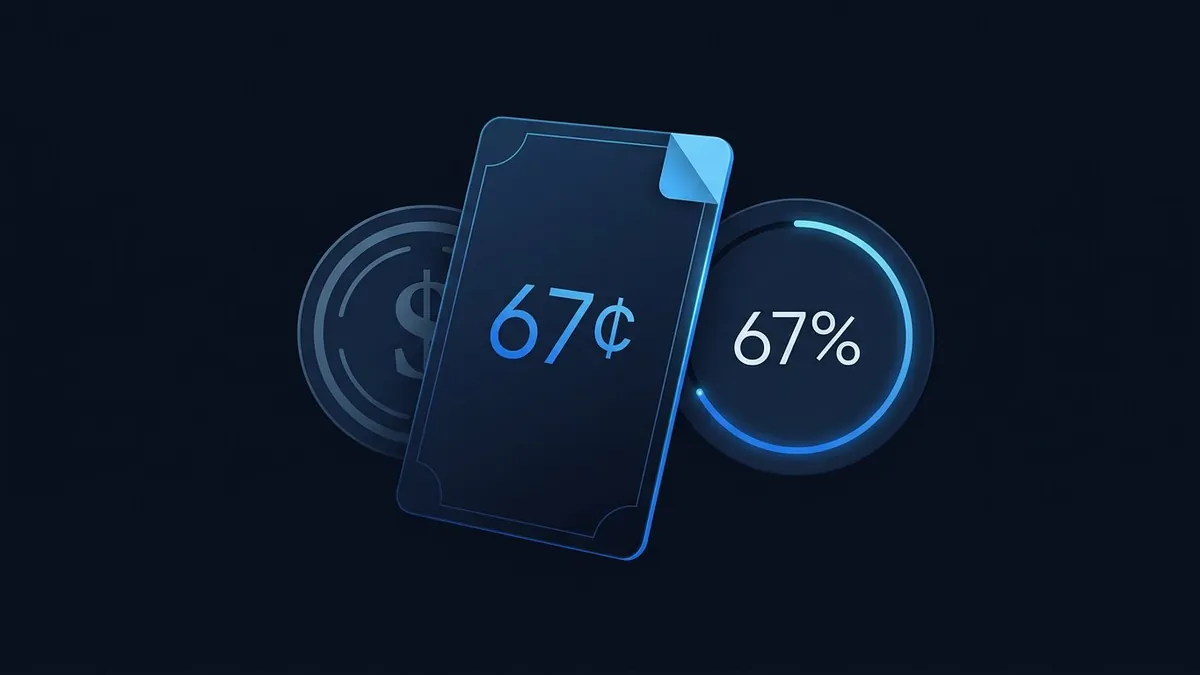
How to Read Prediction Market Odds and Implied Probability
A 67 cent price is a 67 per cent implied probability. How to read prediction market odds, convert bookmaker odds and spot where the price misleads.
Read the guide →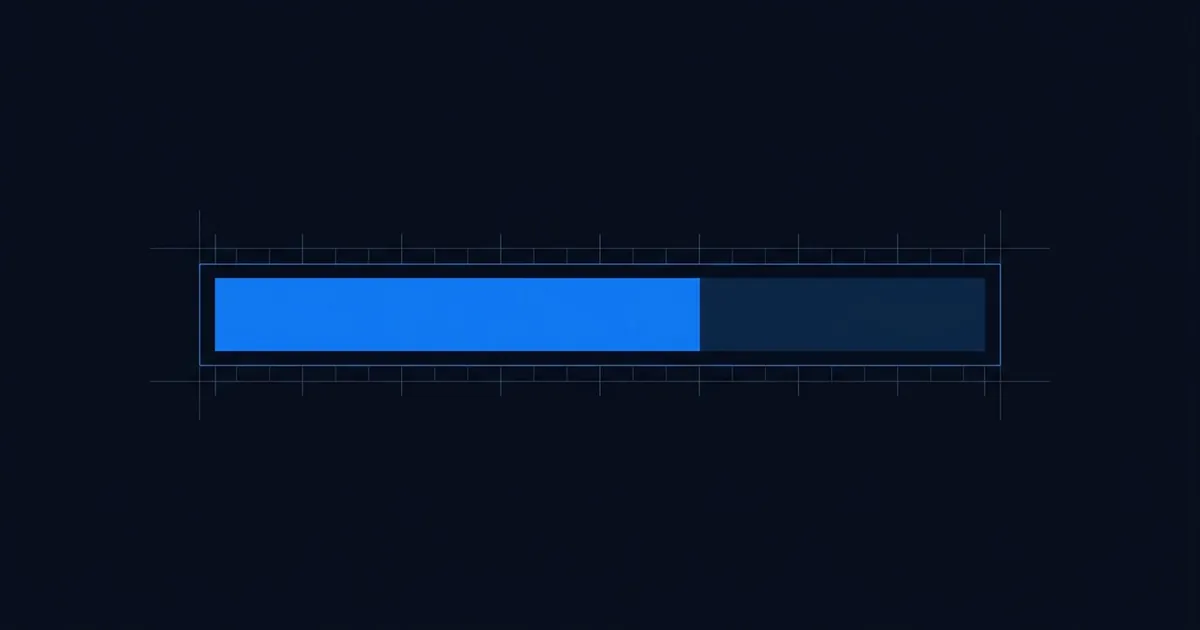
What Are Prediction Markets? A Plain-English Guide
Prediction markets turn questions about the future into prices. How the core mechanic works, where the probability comes from, a brief history from the Iowa Electronic Markets to Kalshi's $43 billion 2025 volume, and how to get started.
Read the guide →

Guides
Longer reads on how to think about a price. All guides
- A poll is a sample. A price is a stake
- Why the same question has two different prices
- Why a contract at 95 cents is not a safe position
- Being right more often is a measurable skill
Questions about your account or the app: Support